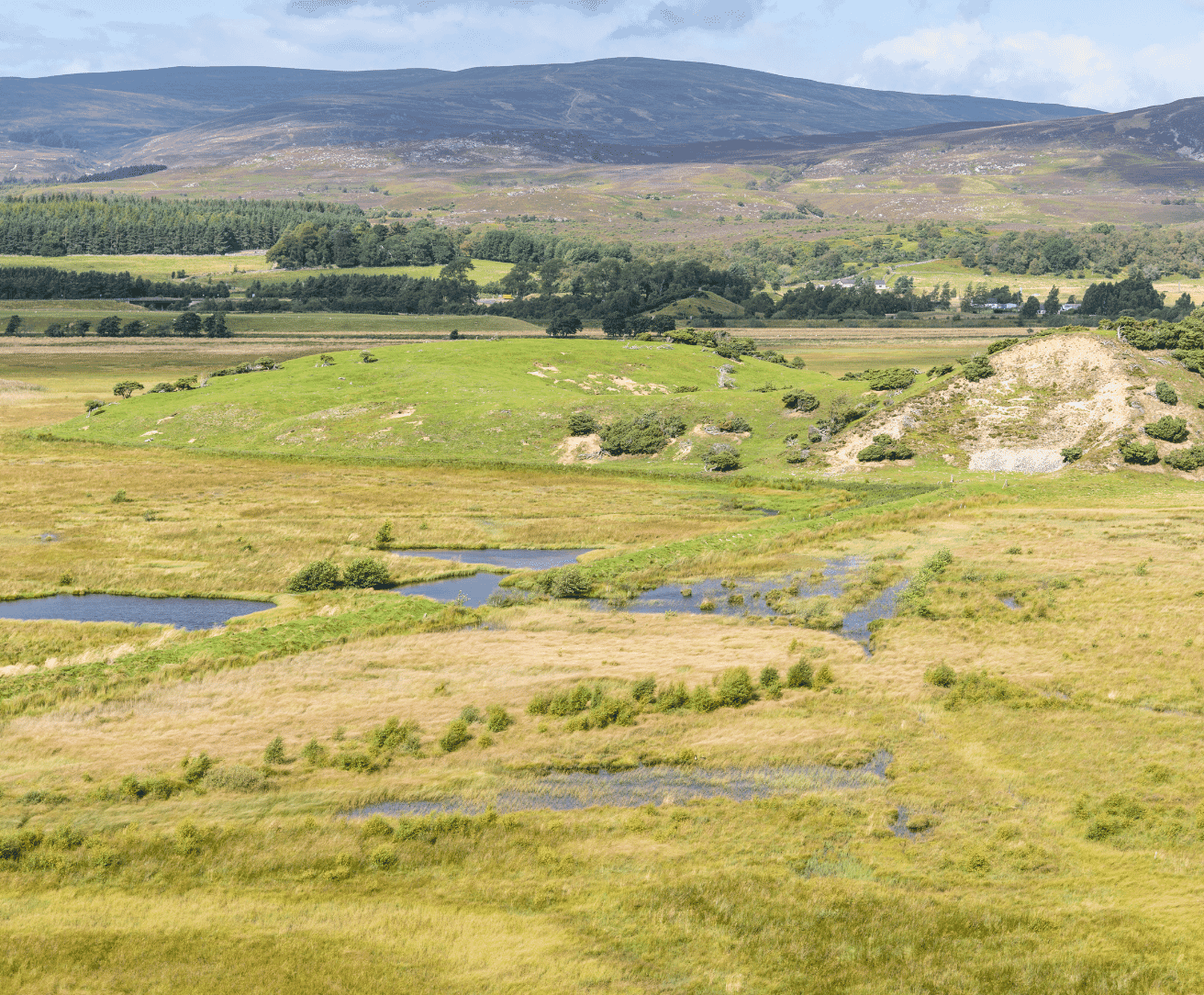
From EU Oversight to UK Accountability: Biodiversity Due Diligence After Brexit
June 20, 2024

What followed was not the disappearance of protections, but a shift in responsibility, oversight, and long‑term certainty. And for companies with complex supply chains – especially those sourcing metals, minerals, and other nature‑linked commodities – this shift has direct implications for due diligence, responsible sourcing, and operational risk.
This blog covers what has changed, what remains, and what businesses must now do to stay ahead.
What happened to Natura 2000 in the UK?
When the UK left the EU, all existing Special Areas of Conservation (SACs) and Special Protection Areas (SPAs) were retained. They were simply rebranded as part of the National Site Network in England and Wales, while Scotland and Northern Ireland continue to reference ‘European sites’ under domestic law.
Crucially:
- The legal protections were copied into UK law through amendments to the Habitats Regulations.
- Appropriate Assessments still apply.
- Species protection rules remain in force.
In other words: the sites didn’t disappear, but the EU no longer oversees them.
The UK now holds full responsibility for enforcement. Without the European Commission or the Court of Justice of the EU acting as backstops, the strength of biodiversity protection now depends entirely on UK institutions – and on the political will of current and future governments.
This introduces a new category of risk: regulatory stability.
Biodiversity Action Planning after Brexit
International commitments still apply
The UK remains bound by global biodiversity agreements such as the Bern Convention and the Convention on Biological Diversity. These require ongoing protection of habitats and species, regardless of EU membership.
Leaving the Common Agricultural Policy (CAP) freed the UK to redesign farming subsidies. England’s Environmental Land Management (ELM) scheme aims to pay farmers for public goods such as habitat creation, carbon storage, and flood mitigation.
But implementation has been uneven, and the transition period has created uncertainty for land managers – which in turn affects land‑use planning, conservation outcomes, and supply‑chain stability.
Devolution is driving policy divergence
England, Scotland, Wales, and Northern Ireland are now moving in different directions on biodiversity, land use, and environmental governance. For businesses operating UK‑wide, this means navigating multiple regulatory regimes, each evolving at its own pace.
What this means for supply chain due diligence
Brexit didn’t weaken biodiversity obligations – it made them more fragmented, more dynamic, and more dependent on corporate leadership. For companies with supply chains touching land, water, or ecosystems, this creates several challenges.
- Divergence increases complexity
Before Brexit, the EU provided a single, harmonised biodiversity framework. Now:
- The UK has its own system
- The EU continues to strengthen its biodiversity rules
- UK nations are diverging internally
This means companies must track multiple, evolving standards across jurisdictions.
- Oversight has shifted from EU to UK institutions
Protections remain, but enforcement is now domestic. This raises questions about:
- Long‑term consistency
- Resourcing of regulators
- Potential future deregulation
Due diligence must now assess not just compliance, but regulatory resilience.
- Global expectations are rising regardless of Brexit
Even outside the EU, companies face increasing pressure to assess and disclose biodiversity risks through:
- TNFD
- CSRD and ESRS E4 (for EU‑linked operations)
- CSDDD
- Investor‑driven nature‑risk assessments
- Mandatory Biodiversity Net Gain in England
Implications for metal and mineral value chains
Metal and mineral supply chains are uniquely exposed because extraction, processing, and infrastructure often intersect with sensitive ecosystems – including former Natura 2000 sites.
Brexit amplifies this exposure in several ways:
1. Stricter scrutiny on UK extraction and processing
As the UK seeks to expand domestic critical minerals capacity, projects near protected sites will face:
- More rigorous biodiversity assessments
- Higher expectations for mitigation and restoration
- Greater public and NGO attention
2. Cross‑border reporting becomes more complex
Companies selling into the EU must still meet EU biodiversity‑related due‑diligence standards – even if UK law diverges.
3, Transparency expectations are rising
Investors increasingly expect companies to demonstrate:
- No sourcing from areas of high biodiversity value
- Robust biodiversity management plans
- Supplier engagement on nature impacts
4. Landscape‑level understanding is now essential
Because UK nations are diverging in policy, companies must understand:
- Where suppliers operate
- Which biodiversity rules apply
- How future policy changes could affect operations
What this means for responsible operators
The post‑Brexit biodiversity landscape demands a more proactive, strategic approach to due diligence. Companies should:
- Map biodiversity dependencies and impacts across their supply chains
- Assess regulatory divergence between the UK, EU, and devolved nations
- Engage suppliers early on biodiversity expectations
- Integrate nature‑related risks into procurement and investment decisions
- Align with global frameworks such as TNFD and CSDDD
- Demonstrate nature‑positive outcomes, not just compliance
The companies that thrive are likely to be those that treat biodiversity as a core component of supply‑chain resilience, not a peripheral compliance issue.
How TDi can help
TDi specialises in helping organisations navigate the increasingly complex intersection of biodiversity governance, responsible sourcing, and supply‑chain due diligence. In a post‑Brexit landscape where regulatory divergence and nature‑related risks are accelerating, TDi supports companies to:
- Understand and anticipate biodiversity regulations across the UK, EU, and global markets
- Map biodiversity risks and dependencies across metal, mineral, and renewable‑energy value chains
- Conduct robust due‑diligence assessments aligned with TNFD, CSDDD, and emerging nature‑positive frameworks
- Engage suppliers and build capacity to meet rising biodiversity expectations
- Design and implement nature‑positive strategies that strengthen operational resilience
- Communicate transparently with investors and stakeholders, demonstrating leadership in nature stewardship
In short, TDi helps companies turn biodiversity risks from a source of uncertainty into a strategic advantage – building supply chains that are compliant, resilient, and aligned with the future of responsible business. Get in touch to find out more.
References
- Uk Government – changes to the Habitat Regulations 2017
- Conservation of Habitats and Species (Amendment) (EU Exit) Regulations 2019
- DEFRA: The National Site Network
- DEFRA: Environmental Land Management schemes
- Natura 2000 – European Commission
- Birds Directive (2009/147/EC)
- Habitats Directive (92/43/EEC)
- EU Biodiversity Strategy for 2030
- Nature Restoration Law (overview)
- Brexit and the Environment – Academic Network
- BSG Ecology – Natura 2000 post‑Brexit: Challenges and Opportunities
- BRX0134 – Evidence on the Future of the Natural Environment after the EU Referendum