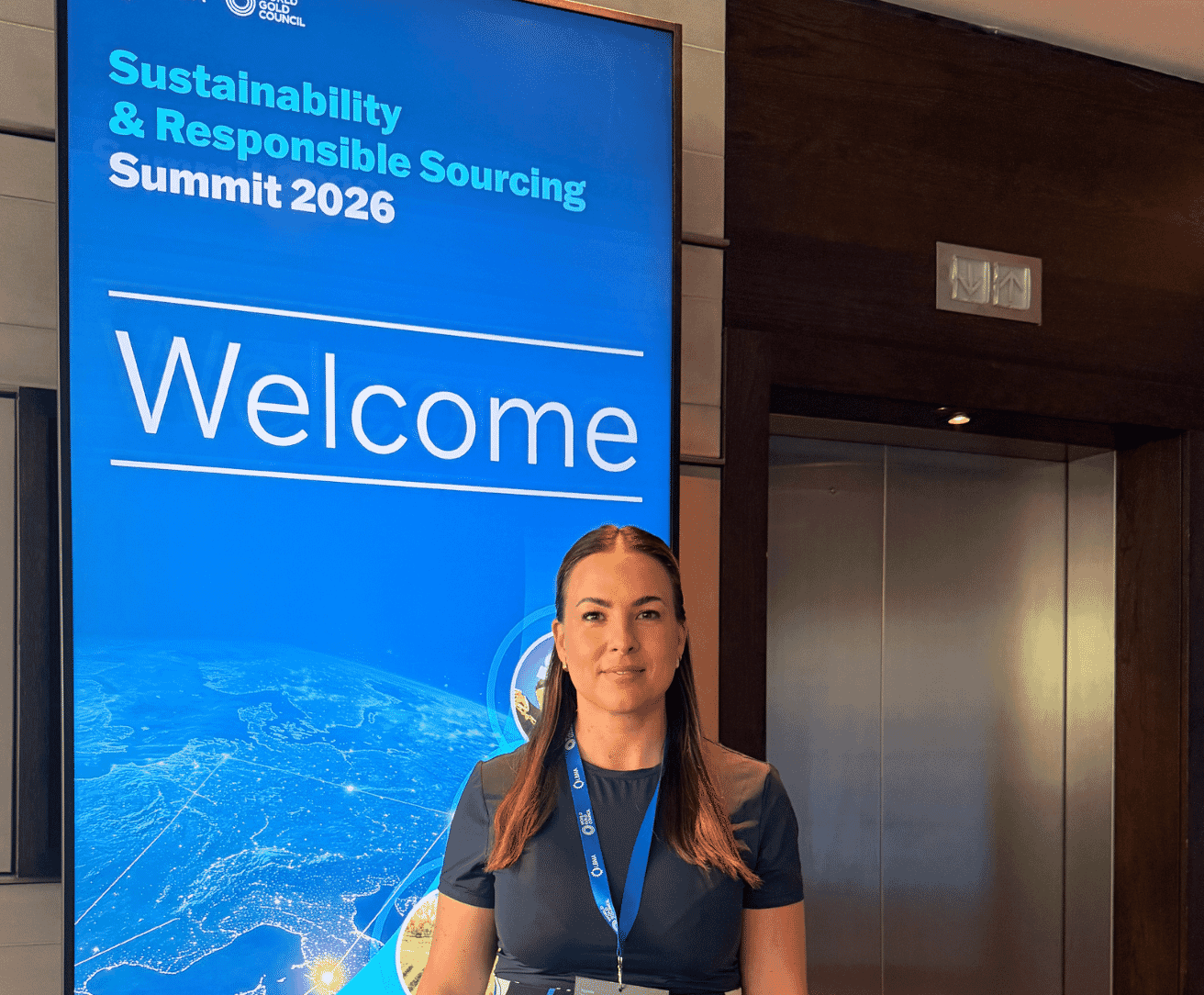
Responsible Sourcing in Gold Is Moving Beyond Compliance: TDi’s Insights from the LBMA/World Gold Council Summit 2026
June 24, 2026

Across the summit, a clear message emerged: responsible sourcing in the gold sector is entering a new phase. The conversation is no longer only about whether standards, certification systems and compliance frameworks exist. The more important question now is whether they are working in practice, delivering measurable impact, and keeping pace with a rapidly changing risk landscape.
For Clara, the summit reinforced that responsible sourcing is moving beyond traditional compliance and certification toward more technology-enabled, intelligence-led, collaborative and outcome-focused systems.
Several key themes stood out.
- Responsible sourcing must move beyond compliance
Across multiple sessions, speakers reinforced that standards and regulatory compliance alone are not enough. Long-term trust depends on transparency, integrity, evidence of implementation, and the ability to demonstrate real impact beyond audit requirements.
A recurring message was that the biggest challenges are not always gaps in standards themselves, but weaknesses in implementation. Inconsistent audits, over-reliance on paperwork, fake documentation and varying auditor capability all point to the need for more forensic, risk-based and intelligence-led assurance approaches.
The shift is increasingly from checklist compliance to systems that can show whether responsible sourcing commitments are actually being delivered in the real world.
2. Gold is becoming increasingly geopolitical
The summit also highlighted how deeply gold supply chains are now entangled with geopolitics, sanctions avoidance, resource nationalism, alternative financial systems, state reserves, conflict financing and organised crime.
This has major implications for due diligence system design. Responsible sourcing can no longer be treated separately from customs, anti-money laundering, sanctions compliance, law enforcement and geopolitical risk monitoring. As illicit gold flows become more sophisticated, companies will need stronger intelligence, better data and more coordinated approaches to risk management.
3. ASGM remains one of the sector’s most complex challenges
Artisanal and small-scale gold mining featured prominently throughout the summit. Discussions focused on the need to avoid criminalising vulnerable miners, while accelerating formalisation through traceability systems, responsible processing, market access, access to finance and stronger commercial incentives.
Case studies, including from PlanetGOLD in Brazil, underlined that illegal mining, mercury use and smuggling are often symptoms of informality. Formalisation requires more than compliance pressure. It needs fair pricing, finance, market access, technical support and progressive improvement pathways that make responsible participation viable for miners and communities.
4. Technology is reshaping assurance and traceability
Technology was another major theme, with sessions exploring chemical origin verification, real-time traceability tools, AI-supported audit consistency, remote assurance models, geospatial monitoring, blockchain and automated due diligence.
These tools have the potential to make audits faster, more consistent, more data-driven and more scalable. However, the discussions also made clear that technology is not a substitute for trust, governance or judgement. Digital systems need to be designed around real supply chain conditions, user capacity and credible assurance processes if they are to deliver meaningful impact.
5. The sector is moving toward harmonisation and reduced assurance burden
A recurring concern was the complexity created by fragmented sustainability standards and duplicative assurance requirements. Increasing attention is now being placed on harmonisation, standard consolidation, interoperability and more efficient assurance models.
For companies operating across multiple markets and frameworks, this shift is essential. The future of responsible sourcing will require systems that maintain rigour while reducing unnecessary duplication and improving alignment across industries.
6. Trust is becoming the real currency of sustainability
One of the strongest messages from the summit was that compliance may provide a licence to operate, but trust provides a licence to grow. Independent verification, transparency, strong governance, stakeholder engagement and credible systems remain central to building long-term legitimacy.
This is particularly important in a sector facing heightened scrutiny from consumers, regulators, investors, downstream companies and civil society. Trust will increasingly depend on whether companies can demonstrate not only that they have policies and standards in place, but that those systems are producing credible outcomes.
7. Climate and nature must move into business strategy
The summit also reinforced that climate and nature risk can no longer sit only within reporting or disclosure functions. Companies need to integrate climate resilience, biodiversity, human rights, gender considerations and broader sustainability risks into core business decision-making.
Sustainability is increasingly being understood as a matter of business resilience, market access, capital allocation and long-term value creation, rather than a peripheral ESG concern.
What this means for responsible sourcing
Taken together, the summit reflected a clear shift in what responsible sourcing means in practice:
- From certification to continuous monitoring.
- From pass/fail compliance to risk-based assurance.
- From static audits to technology-enabled verification.
- From standards on paper to measurable impact.
- From fragmented systems to greater alignment and interoperability.
For TDi, these conversations sit at the heart of our work supporting companies, investors, standards bodies and supply chain actors to strengthen responsible sourcing systems, improve assurance, manage risk and build more resilient mineral value chains.
We support organisations with assurance system design, risk-based audit methodologies, due diligence framework development, auditor training, standards benchmarking, traceability systems, ASGM responsible sourcing programmes, ESG reporting architecture, climate and nature risk assessments, commodity risk monitoring and country risk intelligence.
As the summit made clear, the future of responsible sourcing in gold will depend on systems that are not only compliant, but credible, adaptive, technology-enabled and capable of proving that they work in practice.