Sand | From Recalls to Responsible Sourcing
July 21, 2026

The Hidden Risk in Your Supply Chain | Part 2
In November 2025, routine laboratory testing in Australia found asbestos in the sand within widely available children’s toys. Australian and New Zealand authorities responded quickly with large-scale recalls.3 Within a few months, in early 2026, multiple sand-based toy products had been pulled from the shelves of major British retailers, while French authorities went further still – asking retailers to suspend sales of all sand-based toys nationwide.2,3,4 The cause wasn’t a manufacturing error. It was the sand itself – contaminated at source with naturally occurring asbestos.
This is a very public reminder that a supposedly low-risk material can carry significant reputational exposure – and a clear illustration of the hidden risks within the supply chain of what some might describe as one of the most ordinary materials on the planet.
This blog touches on some of the risks within sand supply chains; what the OECD’s new due diligence guidance for sand and silicates means for the many different sectors and industries these materials touch; and the steps your business can take to build long-term supply resilience and reduce compliance, operational and reputational risk. This isn’t only a story of risk in the toy industry, or even just about sand – it’s a case study on due diligence for the type of raw materials that are often overlooked, under-mapped and which pose a material risk across multiple sectors.
The hidden risks associated with sand extraction
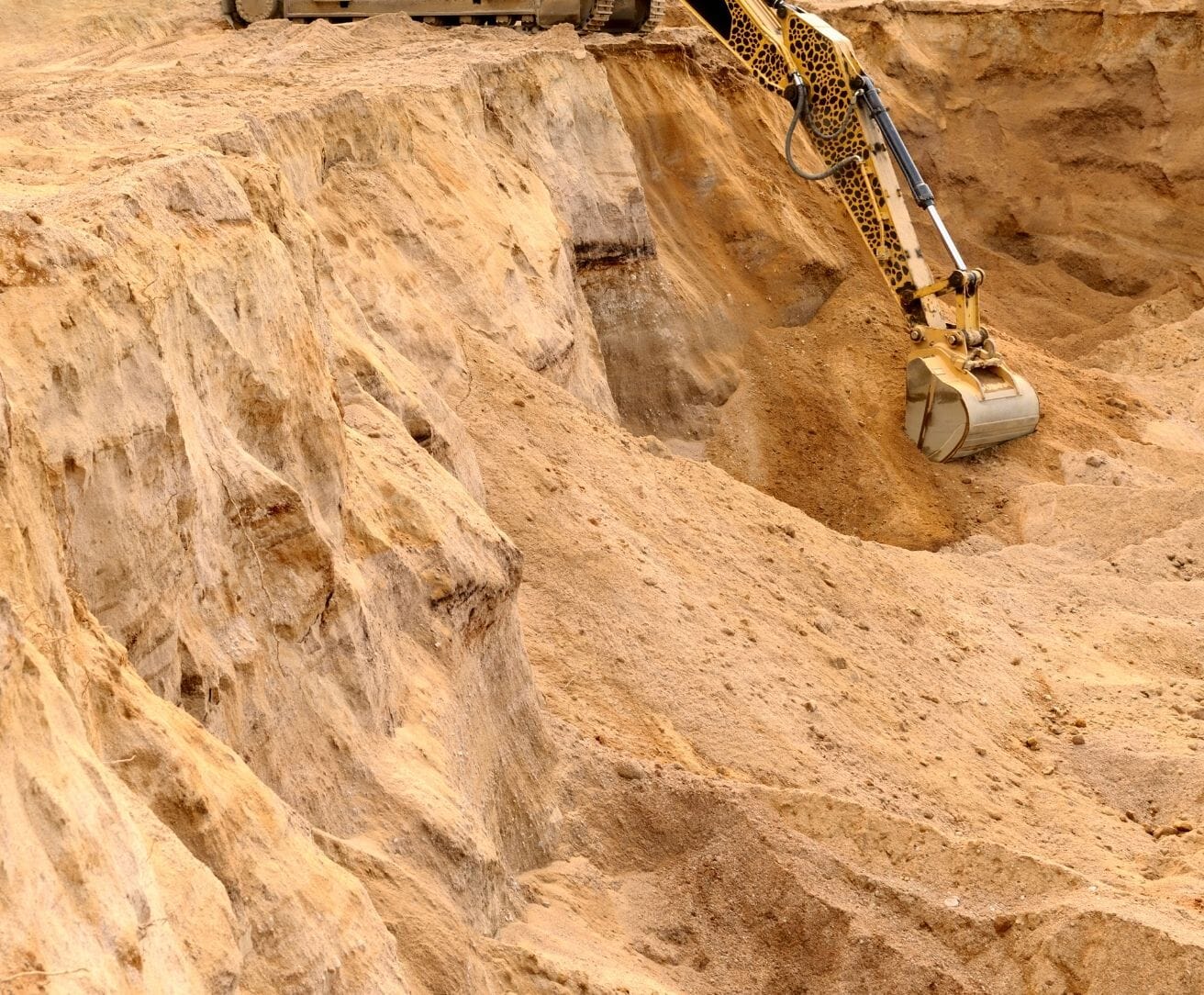
In TDi’s first article in this series, published in May 2025, we highlighted that sand and other silicate materials are the world’s most-mined solid raw materials – with more than 50 billion tonnes extracted from marine, riverine and terrestrial ecosystems every year.5 Sand is critical to global economies, but its importance – and the ESG risks associated with its extraction – have typically been talked about far less than other critical materials. The perception that sand is ‘everywhere’ hides the fact that its current rate of extraction vastly exceeds its natural replenishment.
In July 2025, TDi hosted a webinar on the responsible sourcing of sand and silicates with the Global Centre for Mineral Security, reporting back from a closed-door OECD Forum session on the topic.6 That OECD session fed into a wider, multi-year effort: the Coalition for Responsible Sand and Silicates, led by the University of Queensland’s Sustainable Minerals Institute – which began life as a 2022 supply chain scoping study with IKEA, and is now formalising into a full multi-stakeholder coalition, backed by companies including ArcelorMittal, BMW, H&M, Holcim, Mercedes-Benz, Roca Group and Inter IKEA.7
In February 2026, the OECD published Due Diligence for Responsible Sand and Silicate Supply Chains – the first report to apply due diligence standards specifically to this sector.1 In terms of ESG risk, the report makes for hard reading. It describes how sand mining in the Mekong Delta runs at ten times its natural replacement rate, and that up to one sixth of all sand dredging between 2018 and 2022 took place inside marine protected areas. Most conflict-affected and high-risk areas (CAHRAs) have some sand or silicate production, with corruption, human rights abuses, financial crime, and largely informal, poorly governed extraction running through the sector.1
There’s a strategic angle too. China dominates solar-grade sand and silicate processing – but depends on the United States for the high-purity quartz needed to make the crucibles that process it, with a single US mine supplying 70% of the world’s total.1 This is a concentration risk that deserves an article of its own – and it’s a topic we’ll come back to later in this series. For now, it’s a reminder that even a material that is seemingly ubiquitous can still have major chokepoints.
A multi-sector risk
The sand contamination risk within the toy industry highlighted in this article was caused by naturally occurring asbestos in the rock and sand deposits from which the play sand had been mined, rather than anything introduced during manufacturing.2,3 The risk profile of sand changes completely depending on what it’s used for and where it comes from.
Construction is the largest user of sand by far, consuming the bulk of the 50 billion tonnes extracted worldwide each year.1 Here the risk profile is more about what happens at the point of extraction: habitat loss, informal or illegal mining, and impacts on communities and Indigenous rights, concentrated in supply chains that are often short and local but cumulatively vast in scale.
Beyond construction, a smaller – but still substantial – pool of ‘industrial’ silica sand feeds a wide range of specialist end uses, each with its own quality specification and risk profile. Industry estimates put annual industrial silica sand production at around 300 million tonnes, roughly 1% of total sand and gravel demand, split across five main sectors: glass (34%), foundry (22%), oil and gas (20%), high-end building materials and ceramics (7%), and chemicals (6%).8
Glass needs a tightly specified grade of sand, typically over 95% silica, sourced from a smaller and more regulated pool than construction sand – generally quarried and transported locally. Recycling is already doing real work here: recycled glass routinely replaces virgin sand in production, cutting demand for freshly quarried material.9
Foundries and metal casters use high-quality silica sand to make the moulds and cores for cast metal parts – everything from car engine blocks to manhole covers. Global spent foundry sand volumes run into the tens of millions of tonnes a year; regulators including the US EPA have concluded that much of this ‘waste’ sand can be safely reused in construction and other applications, though only a fraction currently is.10
Oil and gas bring a different kind of risk again – this time to workers rather than ecosystems. Silica sand is the standard ‘proppant’ used in hydraulic fracturing, holding open the fractures that let oil and gas flow. Handling and moving this sand generates fine, breathable silica dust, and health and safety regulators in the US and Australia have repeatedly found worker exposure levels well above safe limits – sometimes ten times or more above the recommended threshold – with long-term exposure linked to silicosis, an incurable lung disease, as well as lung cancer and kidney disease.11
Sand-derived materials also sit closer to consumers than most people realise. Hydrated silica is a common abrasive in toothpaste, mica and talc provide shimmer in cosmetics, and glass packaging – itself a sand product – carries many of these products to market.
Taken together, the picture is of an unusually wide range of supply chains, each with different potential points of failure when it comes to risk identification and management.
Addressing the hidden risk
The OECD’s recommendations translate into a practical due diligence checklist for sand and silicates, whatever sector you’re in:1
- Map where sand, silica or silicates appear in your bill of materials, including indirect uses.
- Identify the extraction context behind each source – river, marine, quarried and manufactured sand all carry different risks.
- Adapt mitigation to your supply chain structure: for short, localised supply chains use community-based approaches; for large, complex, cross-border supply chains, integrate sand and silicates into multi-tiered due diligence frameworks.
- Screen for multiple risk types – including for example contamination, ecosystem or community impact, rather than treating ‘sand risk’ as a single category.
- Track cumulative impact over time rather than relying on a single supplier snapshot.
- Build in circularity and recycled content where local extraction is unsustainable.
- Collaborate on sector-specific initiatives to share risk data and develop monitoring systems.
For toy companies specifically – given recent events – a few steps stand out:
- Implement independent laboratory testing that goes beyond basic compliance.
- Ensure testing protocols cover the entire product, including accessories, not just the sand itself.
- Diversify supply chains to improve resilience and reduce single-source risk.
- Map raw material origins to proactively identify and mitigate risk.
- Request direct supplier transparency that allows the tracing of the provenance of sand and silicate ingredients back to the original extraction site and processing facility.
- Align procurement standards with the OECD’s guidance on responsible sourcing for silicates, and with wider international due diligence standards.1
How TDi can help
With sand so often sourced through fragmented, complex supply chains, traceability can be difficult to establish. The TDi team’s deep supply chain expertise, combined with our digital capability, means that we can support you in identifying, mapping and addressing the risks associated with your materials and suppliers – providing greater visibility, promoting responsible sourcing and helping to build your business’s operational and reputational resilience.
Our Digital Platform is an intelligence engine that enables companies to anticipate risk, act faster, and operate with confidence across the entire supply chain. It maps directly onto the OECD’s six-step due diligence framework.1
- The Commodity Risk Tool provides materials-specific salience data enabling you to assess and prioritise commodities based on risk and business significance.
- The Country Risk Tool screens geographic and production exposure of the countries the materials in your products are sourced from.
- The Supply Chain and Due Diligence Tool maps your specific supply chain and business relationships, assessing risks and enabling compliance-ready due diligence on your most critical suppliers. It can also be used to support supplier engagement, commission audits and track Corrective Action Plans.
- The Search360° News Monitor tracks adverse news in near real time, helping you stay ahead of emerging issues before they affect your reputation.
- The Standards and Regulations Tool identifies the voluntary standards and regulations relevant to your business, and tracks supplier progress against them.
TDi also has many years of experience in bringing otherwise competing organisations together across industries, to develop protocols and standards that benefit all parties and effect real change. Get in touch if you’d like to discuss how we could support your business or organisation in the same way.
You can also find out more about TDi’s services for the cosmetics industry here – where sand-derived silica and mica are often used as key inputs into products and packaging.
Find out about TDi’s due diligence services here and in our due diligence for critical minerals hub here.
What’s next in this series
This is the second article in our series on the hidden risks of sand. You can read the first article here. Next, we’ll look in more depth at one of the sectors flagged above: the construction industry, where sand is consumed at a huge scale.
If there’s a sand-dependent sector you’d like us to cover, let us know.
References
- OECD (2026), Due Diligence for Responsible Sand and Silicate Supply Chains (Accessed July 2026)
- UK Office for Product Safety and Standards, product recall notices, February–May 2026, e.g. Product Recall: ORB Funkee Sand Toys (see also: Addo Play Out To Impress Sand Art Creations; Addo Play Paw Patrol Sand Art Pictures Kit; Smyths Toys Dig Products; Kids Create Sand Art Kit; Grafix Make Your Own Sand Bottle)
- DGCCRF / French Ministry for the Economy, Alerte sur la présence d’amiante dans des jouets à base de sable, 26 February 2026
- franceinfo, Les autorités françaises appellent à suspendre la vente de tous les jouets à base de sable, 27 February 2026
- TDi Sustainability (2025), Sand: The Hidden Risk in Your Supply Chains
- TDi Sustainability (2025), Responsible Sourcing of Sand and Silicates [webinar]
- University of Queensland Sustainable Minerals Institute, Coalition for Responsible Sand and Silicates
- Sibelco (2022), Sibelco and Responsible Sand Production (citing Freedonia World Industrial Silica Sand Report 2016)
- FEVE (European Container Glass Federation), Sustainable Sourcing of Sand and Glass Recycling
- American Foundry Society, All You Ever Wanted to Know About Foundry Sand; US EPA, Beneficial Uses of Spent Foundry Sands
- OSHA / NIOSH, Worker Exposure to Silica during Hydraulic Fracturing (Hazard Alert)