Beyond Traceability: What Responsible Minerals Sourcing Needs Next
June 11, 2026
TDi Sustainability was pleased to participate in the European Partnership for Responsible Minerals (EPRM)’s 10th Anniversary Conference this week, a milestone gathering that reflected both how far the responsible sourcing agenda has come, but also how much work remains to be done.
Over the past decade, responsible minerals sourcing has moved from a specialist concern to a central issue for governments, industry, investors, smelters, civil society and artisanal and small-scale mining communities themselves. At this year’s EPRM event, that shift was clear. Conversations around supply chain resilience, risk management, digital innovation and responsible sourcing are no longer peripheral to global minerals strategy. They are increasingly at the centre of it.
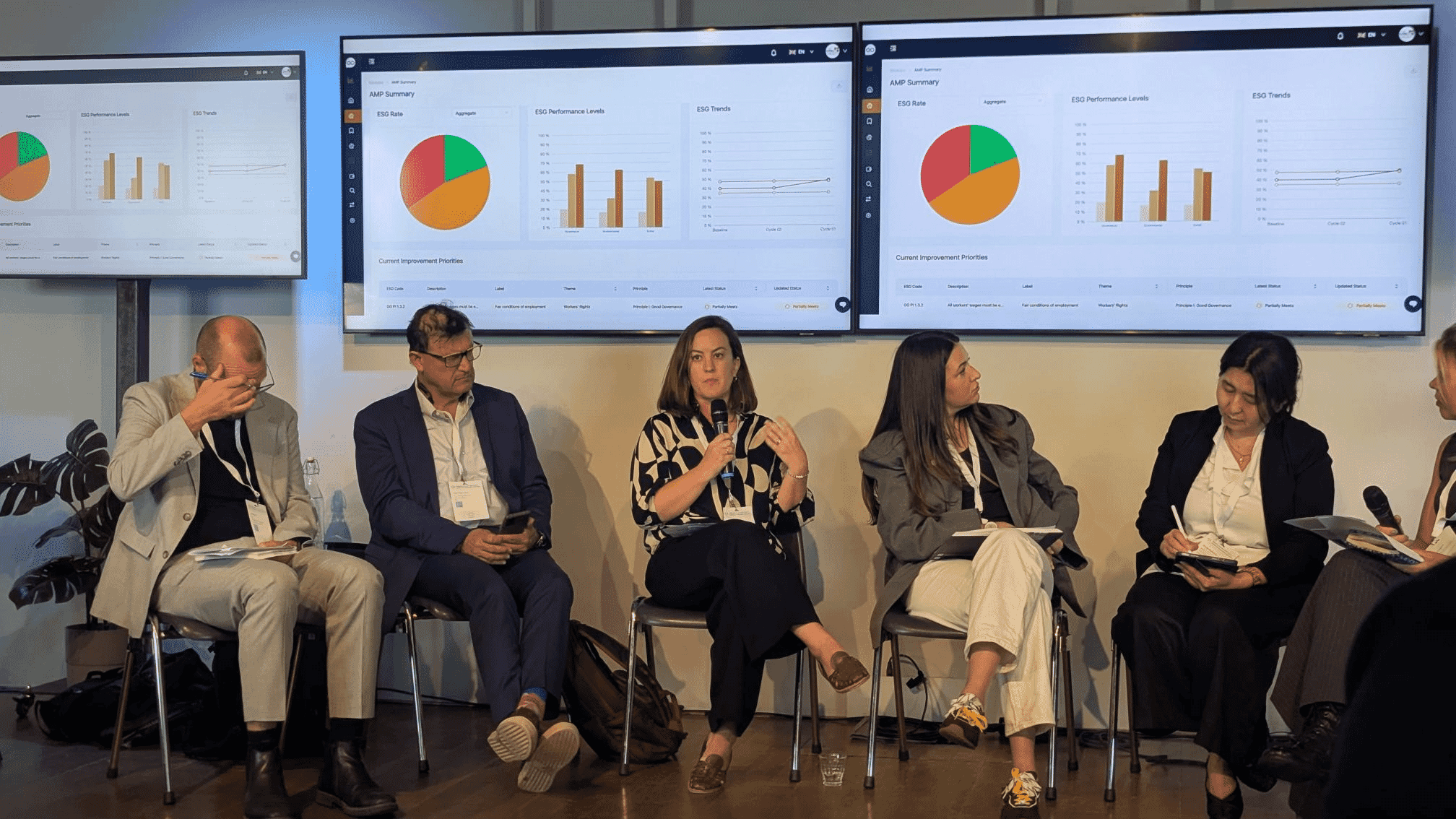
For TDi, the conference was an important opportunity to contribute to these discussions from the perspective of both advisory work and practical upstream engagement. TDi’s Aleksandra Cholewa, PhD co-moderated the session, “Beyond traceability: Can digital tools truly deliver reliable and responsible mineral value chains?”, co-hosted by LuNa Smelter Ltd. Jeannette Greven, TDi’s Lead Upstream and Research, joined the panel alongside:
- Uyanga Gankhuyag – Program Manager – ACP-EU-UNDP Development Minerals Programme, UNDP
- Hans Merket – Researcher and Policy Manager – IPIS – International Peace Information Service
- Roger Tissot – Executive Director – Artisanal Gold Council
- Marya Vazmitsel – President of the Board of Directors – LuNa Smelter Ltd
The panel explored a question that is becoming increasingly important across the sector: digital tools can improve transparency, but how do they translate into real impact on the ground?
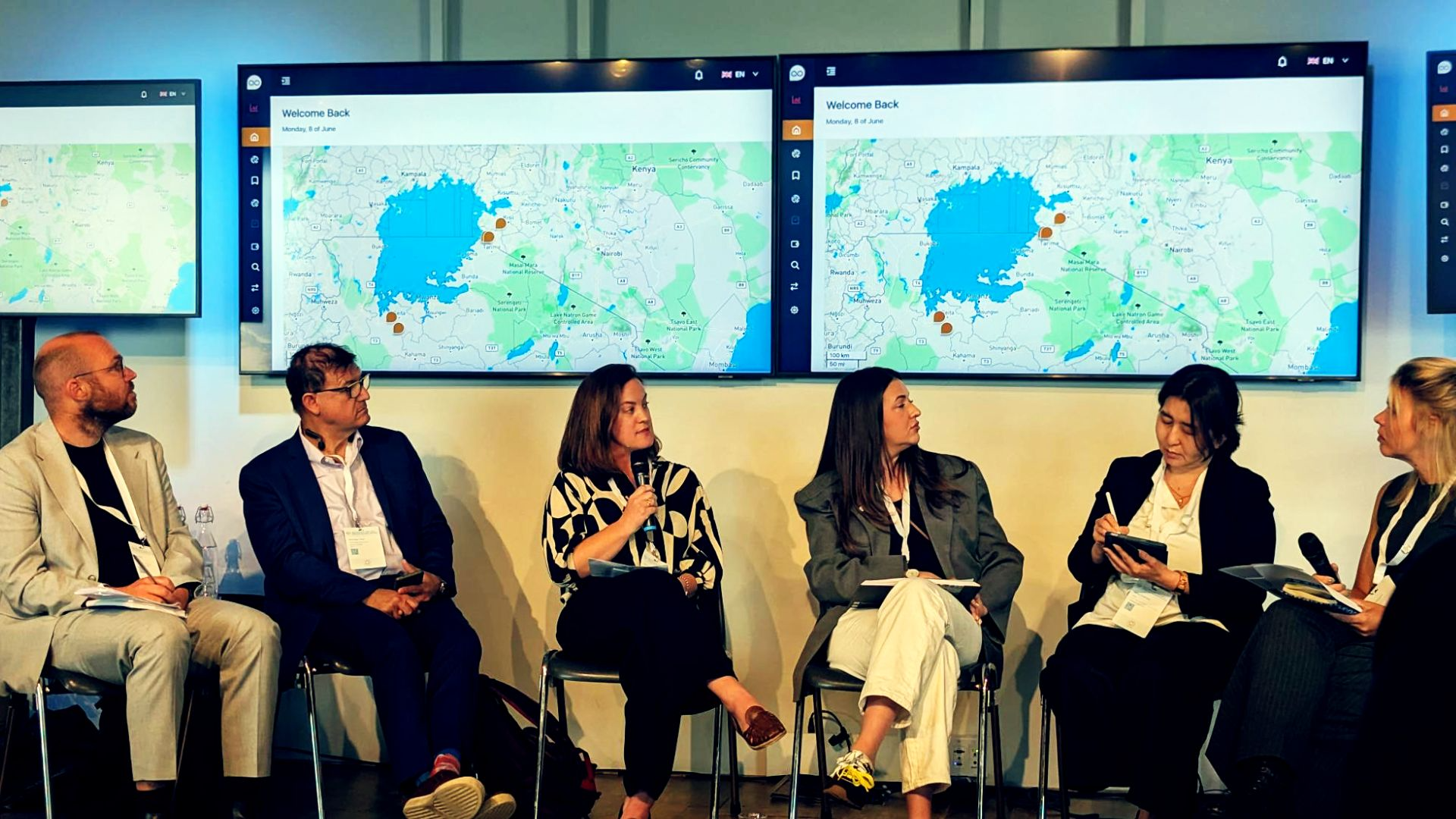
Over the past decade, the responsible minerals sector has seen rapid innovation in traceability platforms, digital mine-site monitoring, facility records, blockchain-based systems and tools to support due diligence. These systems have changed how companies collect information, manage risk, document supply chain activity and engage with artisanal and small-scale mining. But technology alone does not create responsible supply chains.
One of the strongest conclusions from the discussion was that digital tools work best when they are built with communities, not simply for them. A platform may generate data, but without trust, training and meaningful local use, that data can quickly lose its relevance. Technology without relationships risks becoming visibility for buyers without value for miners.
The panel reinforced that trust is the foundation of any credible responsible sourcing system. Digital tools need to be understood, used and questioned by the people closest to the supply chain. Training and capacity building are therefore not add-ons; they are essential to whether a tool can last beyond a pilot phase. Where systems are too complex, inaccessible or disconnected from local realities, they are unlikely to support long-term change. Aleksandra Cholewa, PhD shared experiences from her 8-year journey with LuNa Smelter as a proof point of how digital transformation can work in practice
Inclusion was another key theme. The most durable solutions are those that create visible benefits for miners and mining communities, not only improved reporting for downstream actors. This is particularly important in Artisanal and Small-Scale Mining (ASM) contexts, where informality, limited access to finance, gender inequality, market exclusion and weak infrastructure can all shape whether responsible sourcing systems succeed or fail.
The wider EPRM conference also created space for important reflections on gender-responsive responsible sourcing, ASM-LSM cohabitation, and the changing nature of illicit activity in artisanal and small-scale gold mining. Contributions from ASM representatives, civil society organisations and technical experts helped ground the discussion in the lived realities of mining communities and the practical challenges of building more responsible mineral value chains.
For TDi, one of the most important takeaways was that traceability is not a substitute for due diligence. It is a tool that can support due diligence when it is embedded within a wider system of engagement, verification, accountability and improvement. Digital innovation has an important role to play, but the sector still needs further collaboration around interoperability, shared standards and avoiding duplication across tools and platforms.
The conference also marked a proud moment for The Impact Facility, TDi’s sister organisation, founded by TDi’s Executive Chair, Dr Assheton Stewart Carter. The Impact Facility and Pact were recognised with the first EPRM award in its second decade for their upcoming work on Commercialising Artisanal and Small-Scale Gold in Tanzania, known as CAT Gold. The project will be implemented in Chunya, in Tanzania’s Mbeya Region, with The Impact Facility as lead partner, Pact as co-project partner, and Mint Precious Metals as the supply chain actor, supported by supplier links with Auramet International and Rand Refinery Limited. Running from September 2026 to August 2028, CAT Gold aims to establish a formal, commercially anchored, LBMA-aligned, mercury-free and responsible artisanal and small-scale gold supply chain. The project will support five anchor ASGM sites to transition from mercury-dependent operations to mercury-free processing through a centralised Carbon in Leach processing hub, while onboarding 10 ASGM suppliers into MINT’s responsible sourcing system.
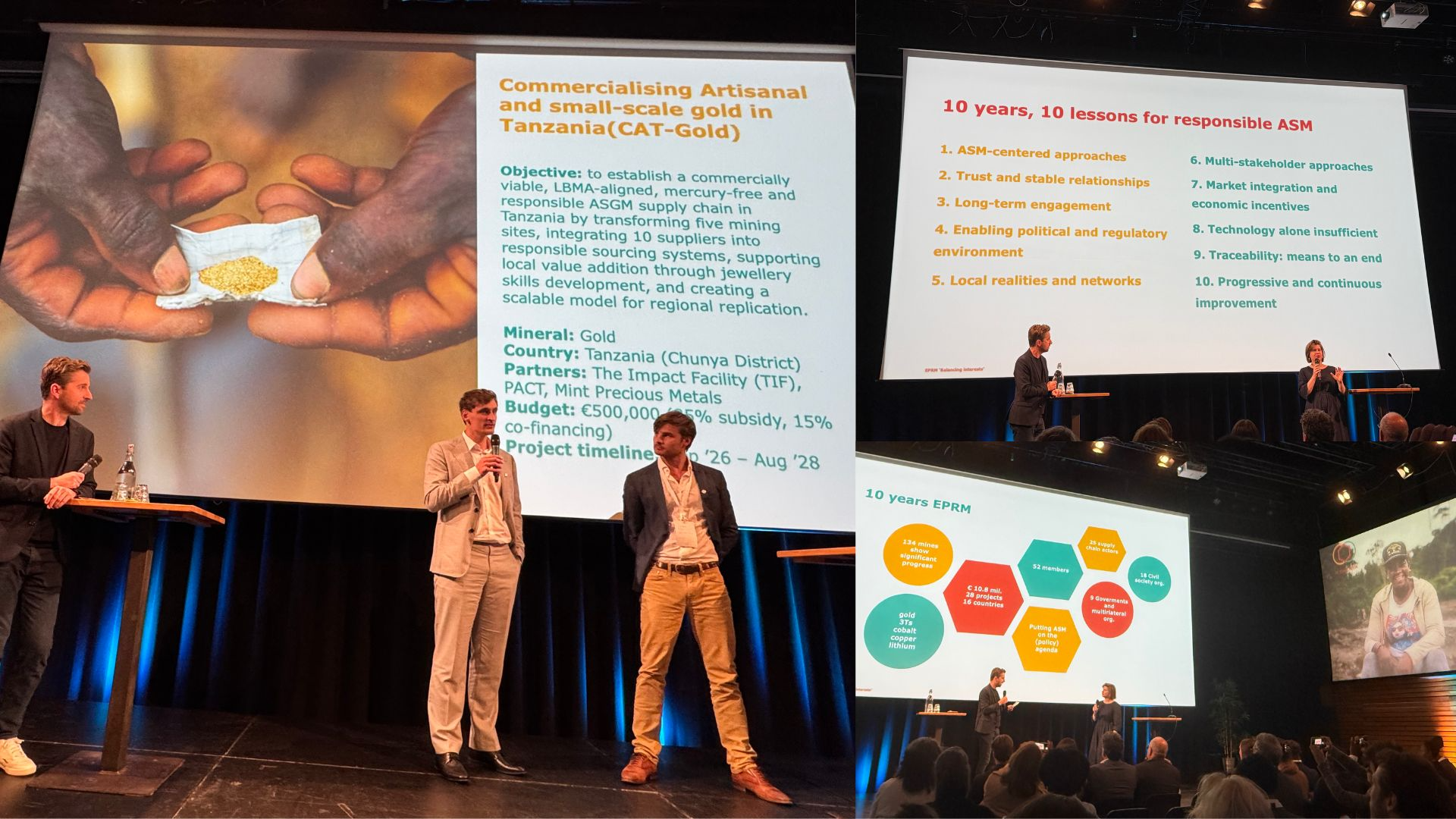
This recognition speaks directly to the wider message of the EPRM conference: responsible sourcing is most powerful when ambition is matched with implementation. Through workstreams focused on professional small-scale mining, investment readiness, formal market access, responsible sourcing infrastructure, local value addition and scaling, CAT Gold reflects the kind of integrated approach needed to move from risk identification to real-world transformation.
As demand for critical and transition minerals continues to grow, many supply chains will remain connected to complex ASM environments. The question is no longer whether traceability matters. It is how traceability, due diligence, finance, policy and local engagement can work together to build supply chains that are credible, commercially viable and genuinely beneficial for the people and communities at their centre.
That is where TDi continues to focus its work: connecting research, advisory expertise, field implementation and investor engagement to help build responsible mineral value chains that are not only more transparent, but more trusted, more inclusive and more resilient.
Please do reach out if you would like to find out more about TDi’s work.