A cautionary tale: Indonesia’s nickel strategy and its three lessons for resource-rich nations pursuing mineral sovereignty
October 25, 2026


Indonesia, now accounting for over 60% of global nickel production1, offers a compelling example of both the opportunities and challenges associated with such policies. Indonesia’s nickel industrialisation strategy has successfully expanded domestic processing capacity. Yet its recent attempts to constrain production and support nickel prices illustrate the limits of mineral market dominance strategies. Its experience raises a more significat question for other resource-rich nations: does increasing domestic processing capacity necessarily translate into greater economic control and long-term national value creation?
Indonesia first restricted nickel ore exports in 2014, before reinstating a comprehensive ban in 2020. Supported by foreign investment, industrial parks such as Morowali (IMIP) and Weda Bay (IWIP) enabled rapid expansion into ferronickel, nickel pig iron and battery-material intermediates. This helped Indonesia double its share of global nickel production beteen 2020 and 2024 alone.2
Other resource-rich nations are pursuing similar objectives, with several already introducing export restrictions to encourage domestic mineral processing. The Democratic Republic of the Congo (DRC) introduced restrictions on copper and cobalt concentrate exports in 20263, while Zimbabwe4, Guinea5, Mali6 and Tanzania7 have also imposed varying restrictions on mineral exports. Others are preparing similar measures: Kenya8 plans to prohibit exports of unprocessed gold, with ambitions to extend restrictions to other minerals, while Gabon9 has announced a ban on unprocessed manganese exports from 2029.
These ambitions coincide with efforts by the European Union10 and other major economies to diversify critical mineral supply chains. However, Indonesia’s experience demonstrates that domestic processing capacity does not automatically guarantee pricing power, economic independence or sustainable industrial development. Three lessons stand out.
-
Market dominance does not guarantee pricing power
Indonesia’s rapid expansion in nickel mining and processing contributed to increased global supply and sustained pressure on prices. Having reshaped the market through its industrialisation strategy, the government has more recently sought to manage production to stabilise prices and protect revenues.
For the year 2026, Indonesia moved to reduce its approved nickel ore mining quota from 379 million tonnes in 2025 to approximately 260-270 million tonnes, a reduction of roughly one-third.11 Unlike the export ban, which aimed to encourage domestic processing, these production restrictions sought to constrain supply and support market prices.
However, despite these restrictions, London Metal Exchange (LME) nickel prices declined from approximately USD 20,000 per tonne in May 2026 to USD 16,500 in September.12
Existing inventories, alternative supply sources and uncertainty surrounding quota implementation have participated in limiting the immediate effect of production cuts. Indonesian processors have increased ore imports from the Philippines to compensate for domestic constraints13, illustrating how trade flows can adjust to national restrictions. Tighter domestic supply may therefore increase costs for local processors without necessarily producing a corresponding increase in international prices.
For other resource-rich countries, this highlights the importance of considering global supply and demand, market inventories and domestic processing requirements before introducing restrictions.
Key lesson:
Mineral production dominance does not necessarily confer pricing power. Export restrictions and production quotas must account for global market conditions, alternative supply sources and the commercial viability of domestic processing.
-
Domestic processing does not guarantee economic independence
Indonesia’s industrialisation has relied heavily on foreign capital and technology. When the country began restricting nickel ore exports in 2014, it lacked the processing infrastructure and specialist expertise needed to achieve its industrial ambitions.
Chinese investment helped overcome these constraints, financing processing facilities and deploying technologies such as high-pressure acid leaching (HPAL), which enables the production of nickel intermediates for battery supply chains. Chinese investment in Indonesia’s nickel refining sector has been estimated at approximately USD 30 billion, with Chinese companies accounting for around 75% of refining capacity.14
While this investment accelerated industrial development, it also created concentrated dependencies on foreign finance, technology, operational expertise and downstream commercial relationships. Processing minerals domestically does not necessarily mean controlling the technologies, ownership structures or markets underpinning that industry.
This is particularly relevant as downstream manufacturers seek to diversify critical mineral supply chains. Although Indonesia has emerged as a major nickel processing hub outside China, some existing dependencies have effectively been relocated rather than eliminated.
For other producing nations, attracting foreign investment should therefore be accompanied by strategies to build lasting national capabilities, including workforce development, technology transfer and local supplier participation.
Key lesson:
Domestic processing should not be confused with economic independence. Investment strategies should diversify partnerships and embed technology transfer, skills development and greater national participation in value creation.
-
Industrial expansion must account for sustainability and market access
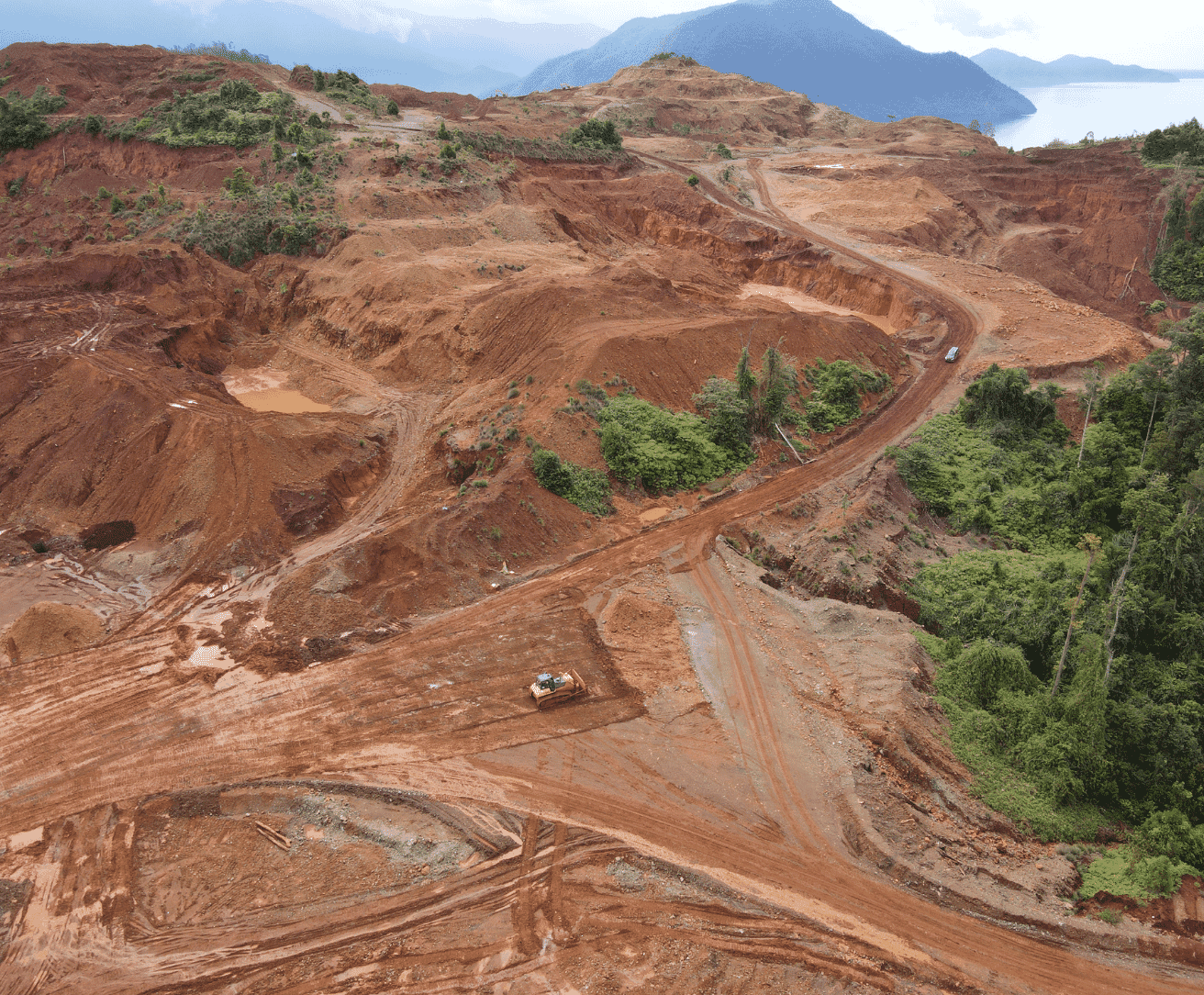
Indonesia’s rapid nickel industrialisation has also exposed significant environmental, social and governance (ESG) risks. Mining and processing expansion has contributed to deforestation, biodiversity loss, water pollution and impacts on surrounding communities.15 Reliance on captive coal-fired power plants has further increased the sector’s greenhouse gas emissions.16
Beyond their immediate impacts on communities and ecosystems, such risks can undermine the longer-term economic benefits of rapid industrialisation. Through their sourcing relationships, companies purchasing Indonesian nickel may become associated with adverse environmental and social impacts, exposing them to compliance, operational and reputational (COR) risks. Automotive companies in particular have faced scrutiny over their supply chains’ links to deforestation and impacts on local communities in Indonesia.17
Regulatory developments reinforce these expectations, with the European Union Batteries Regulation18 and the Corporate Sustainability Due Diligence Directive (CSDDD)19 both requiring covered companies to conduct due diligence and work to prevent negative ESG supply chain impacts. In addition, while nickel is not currently in scope for the EU Carbon Border Adjustment Mechanism (CBAM)20, international decarbonisation efforts are also adding up to the pressure born by companies to reduce their emissions.
For resource-rich nations seeking long-term investment and access to international manufacturers, it is critical that they champion responsible production to foster industrial competitiveness.
Key lesson:
Industrial policies should integrate clean energy, environmental safeguards, stakeholder engagement and transparent due diligence from the outset to protect communities while strengthening long-term market access.
From domestic processing to sustainable national value creation
Indonesia’s experience illustrates both the potential and limitations of mineral sovereignty policies. Its export restrictions successfully stimulated domestic processing, but subsequent challenges demonstrate that industrial expansion alone does not guarantee pricing power, economic independence or sustainable development.
For other resource-rich nations, the objective should extend beyond retaining minerals for domestic processing. Effective policies require realistic market assessments, diversified investment partnerships, domestic capacity-building and environmental and social safeguards.
Indonesia’s experience is not a directly transferable model. Differences in mineral endowments, infrastructure, investment environments and market positions will influence whether similar measures deliver lasting benefits.
Ultimately, the measure of success is not simply how much mineral processing takes place domestically, but how much sustainable economic value remains within the country.
How TDi Sustainability can support you
TDi Sustainability supports governments, mining operators, investors and downstream buyers in developing responsible and resilient critical mineral value chains through:
- Critical Minerals Strategy and Sourcing Tools: Supporting mineral strategies and sourcing approaches informed by market dynamics, geopolitical risks and policy developments. Find out more in our Critical Minerals Hub.
- ESG Due Diligence and Supply Chain Resilience: Leveraging the TDi Digital Platform to identify and monitor environmental, social and governance risks, supply chain dependencies and regulatory requirements.
- Connecting Value Chains and Multi-Stakeholder Partnerships: Facilitating engagement between producers, investors and downstream manufacturers to support diversified partnerships and resilient supply chains. Find out more about how we connect critical mineral value chains here and our work with multi-stakeholder partnerships here.
- Capacity Building and Responsible Sourcing for Artisanal and Small-Scale Mining (ASM): Supporting responsible mining, industry formalisation and skills development to strengthen local capabilities and long-term economic resilience. Find out more here.
Get in touch to discuss how we can support your government, business or organisation.
References:
[1] https://www.iea.org/reports/nickel-2
[5] https://www.bbc.co.uk/news/articles/cjegydvzpzqo
[6] https://www.mining.com/barrick-to-halt-mali-mine-amid-fresh-export-restrictions/
[7] https://www.iea.org/policies/28972-ban-on-the-export-of-unrefined-metals-in-tanzania
[13] https://mining.com.au/indonesias-imports-of-nickel-ore-from-philippines-to-hit-record-in-2026/
[14] https://www.iea.org/reports/world-energy-investment-2025/southeast-asia
[15] https://www.bbc.co.uk/news/articles/c0k36v50zvro
[18] https://eur-lex.europa.eu/eli/reg/2023/1542/oj/eng