Circularity as Security: Reflections from Day 1 of WCEF2026
September 15, 2026

About WCEF2026
The World Circular Economy Forum is the world’s leading platform bringing together governments, businesses, international organisations, experts and innovators to accelerate the transition to a circular economy. First convened by Sitra, the Finnish Innovation Fund, in 2017, WCEF2026 marks the forum’s tenth edition and its first time in South Asia, hosted jointly by India’s Central Pollution Control Board and Sitra in Gandhinagar, Gujarat, from 15-18 September 2026. The event has drawn thousands of participants from dozens of countries for four days of plenaries, parallel sessions, accelerator sessions and an expo of circular economy solutions.
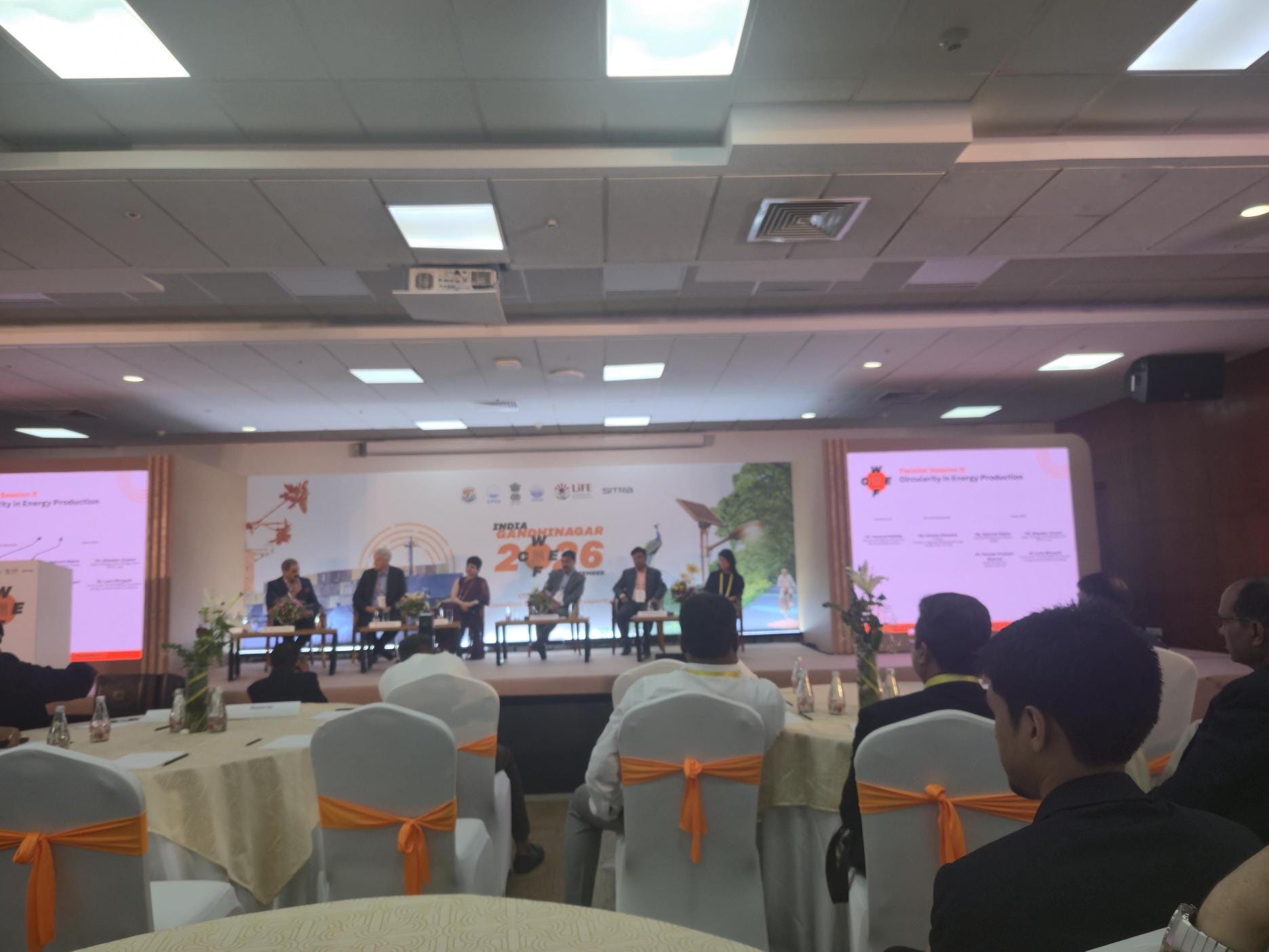
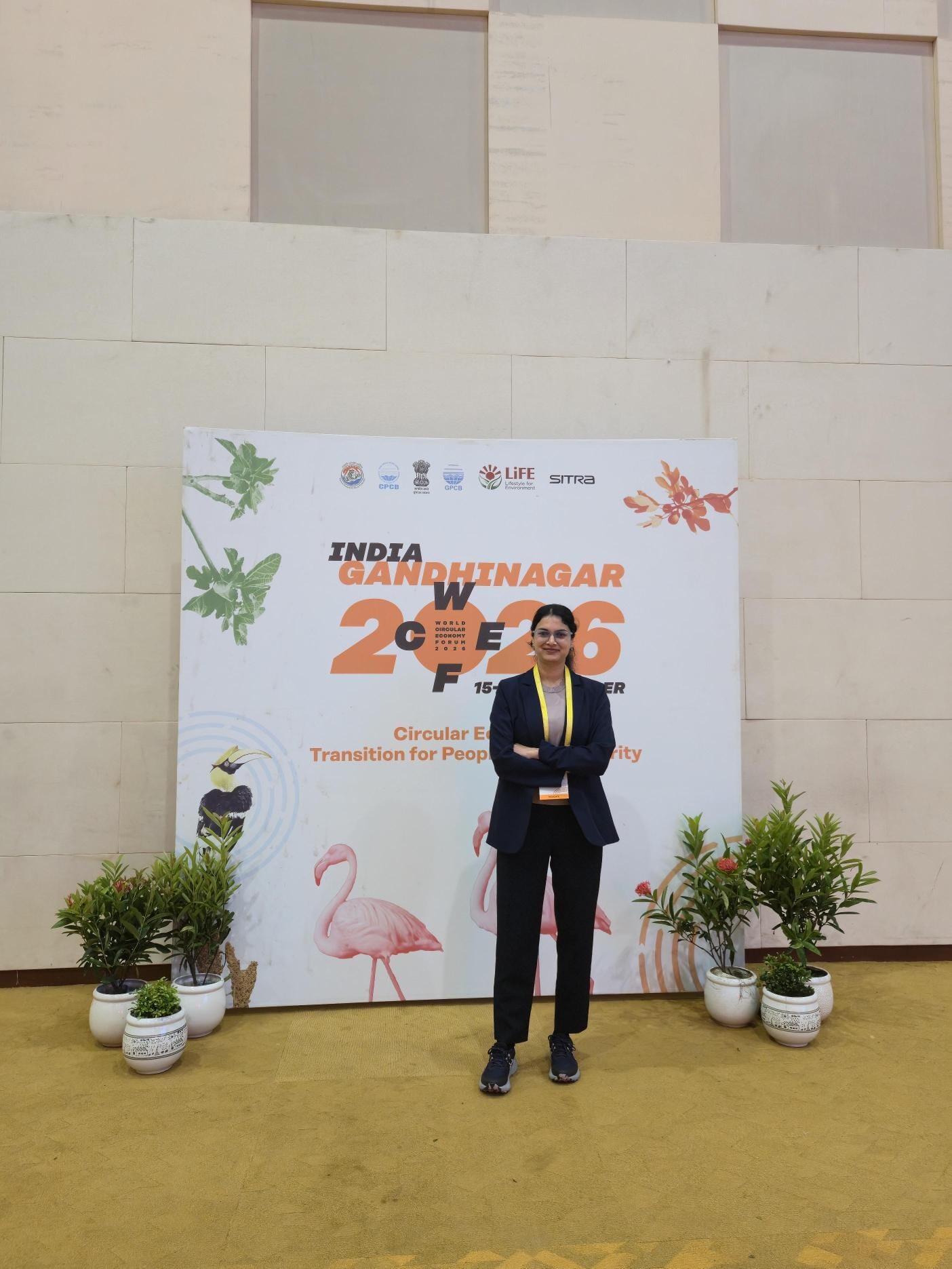
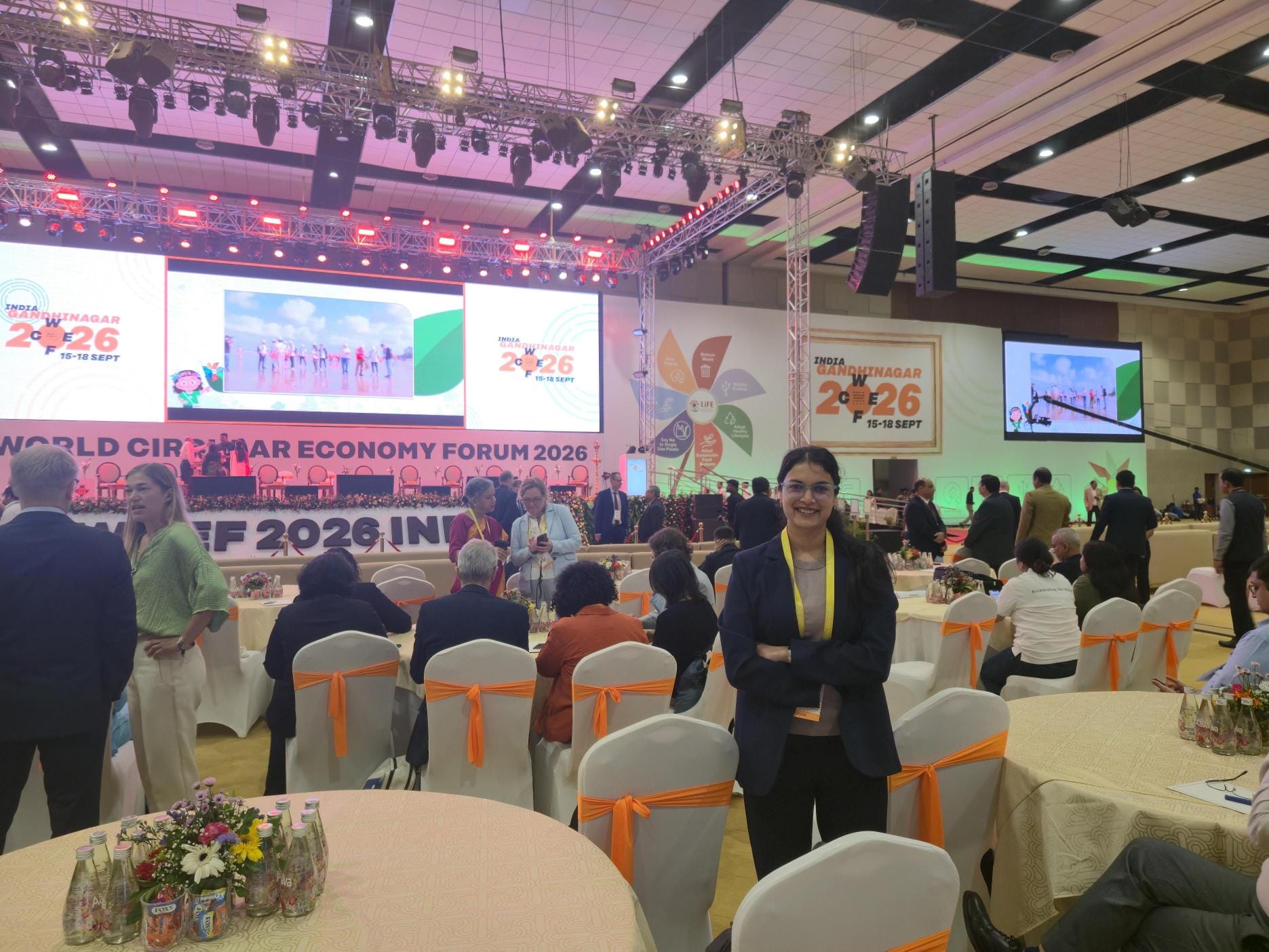
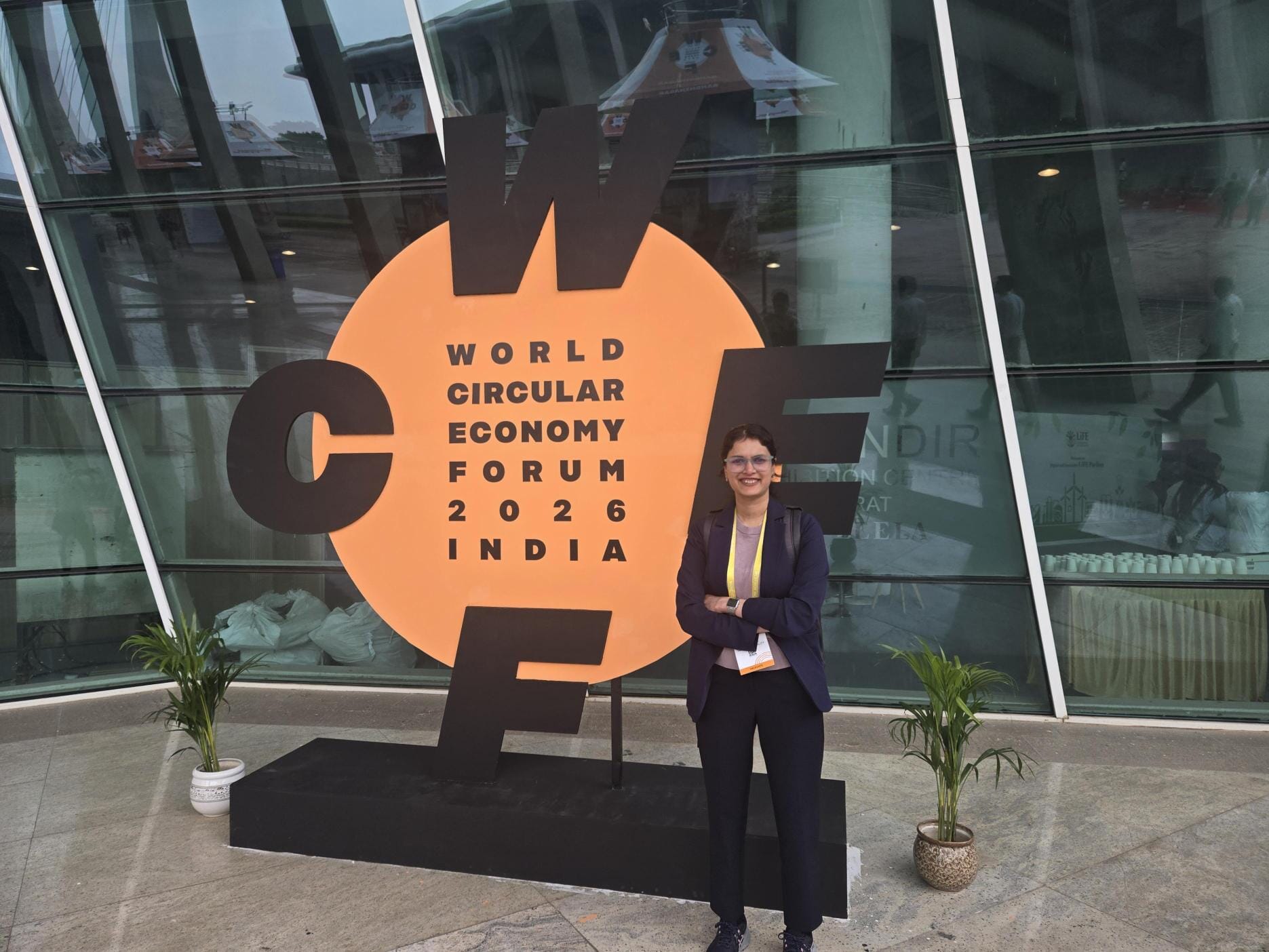
TDi’s Rajalakshmi Gopalakrishnan was on the ground for Day 1.
Circular Economy, Policy, Material Security and Multi-Stakeholder Collaboration
A key message from Day 1 was that the circular economy is increasingly being framed as an economic and national security agenda, rather than purely an environmental one.
Several speakers linked this shift to concerns around critical minerals, resource dependency and supply-chain resilience, alongside the economic efficiency case for reducing exposure to material shortages. Incentives for recycling infrastructure, stable and credible policy frameworks, standards and financial instruments came up repeatedly as enablers of that transition.
A related theme was the need to treat waste as a feedstock or resource rather than something to simply dispose of – though panellists were clear that this only becomes economically viable where markets have the right policy signals, infrastructure, standards and demand for secondary materials.
Traceability and data also featured strongly, particularly as enablers of repair, refurbishment and keeping materials circulating within supply chains. Alongside this, several discussions returned to the importance of pre-competitive collaboration – companies and other stakeholders working together on systemic challenges that no single organisation can solve alone. This is the model followed by the Circularity in Pharmaceutical Packaging Accelerator Initiative (CiPPPA) which is project managed by TDi.
India’s evolving Extended Producer Responsibility (EPR) systems and circular economy policy landscape, together with approaches emerging from Africa and other parts of the Global South, were cited as evidence that circularity is increasingly being seen as a contributor to future economic growth, not just an environmental obligation.
This discussion touches on several areas where TDi works: policy and standards development, assurance, responsible value chains and multi-stakeholder initiatives – including with governments and public organisations.
Key takeaway: Circularity needs more than individual solutions. It requires the policies, standards, incentives, data and collaborative systems that allow those solutions to scale.
Manufacturing and Circular Value Chains
Todyay’s discussions also looked at where AI is already being explored across manufacturing and product value chains, including product and process design, planning and production, commercial and second-hand markets, material intelligence, reverse logistics, and identifying opportunities to extend product life.
Panellists noted that better data can help manufacturers understand how materials behave throughout a product’s use, and where materials may lose recyclability or value along the way. The automotive sector came up as a good illustration – its significant material flows and multiple waste streams create real circularity opportunities, but reverse logistics, recertification and organisational culture remain significant barriers.
One point that stood out: AI itself needs to be viewed through a circularity lens. It depends on semiconductors, data centres, networks and significant material and energy inputs, so it cannot simply be assumed to be inherently circular.
The discussion also reinforced high-value manufacturing as an important area for circular economy interventions – shifting the focus beyond consumer waste towards the design and operation of complex industrial value chains, from electronics to other manufactured goods.
This links to TDi’s work across the mining → materials → manufacturing → product use → recovery → secondary materials value chain. It also underscores a connection between the mining sector and its circular economy activities: products can increasingly be viewed as material banks, with the materials embedded in them a potential future source of secondary raw materials.
Key takeaway: Circularity shouldn’t begin when a product becomes waste. It needs to connect material sourcing, product design, manufacturing, use, repair, reuse, recovery and secondary materials as one value chain.
Get in touch to discuss how TDi can support your business with:
- Material intelligence
- Circularity integration into sustainability standards
- Circular value-chain mapping
- Material traceability and data strategies
- Urban mining and secondary-material strategies
- AI-enabled circularity approaches
- Product stewardship and end-of-life strategies
- Standards and assurance for circular products and materials
This is Day 1 of TDi’s WCEF2026 series. Watch out for insights from Day 2 tomorrow
Explore TDi’s work by sector: Automotive · Electronics · Energy · Jewellery · Governments & Public Organisations · Finance & Investment