
European Sustainability Reporting Standards (ESRS) and Voluntary Sustainability Reporting Standard (VS) | Update
September 30, 2026
The simplified ESRS enter into force on 10 November and apply from financial year 2027 – with early adoption optional for financial year 2026. The VS legally entered into force on 24 September.
The revised ESRS are intended to simplify reporting under the EU Corporate Sustainability Reporting Directive (CSRD). The Voluntary Standard is a voluntary sustainability reporting framework for companies outside the scope of the CSRD.
The key changes are:
- The number of mandatory datapoints has been reduced by more than 60%.
- The total number of datapoints has been reduced by 70%.
- A structured “top-down” approach to double materiality has been introduced. Companies can now reach materiality conclusions primarily through a high-level analysis of their strategy, business model, sectors, geographies, and value chain. If a topic is clearly not relevant on this basis, extensive bottom-up data gathering is not required – a specific, deep-dive assessment is only triggered when an answer isn’t evident from this initial strategic baseline.
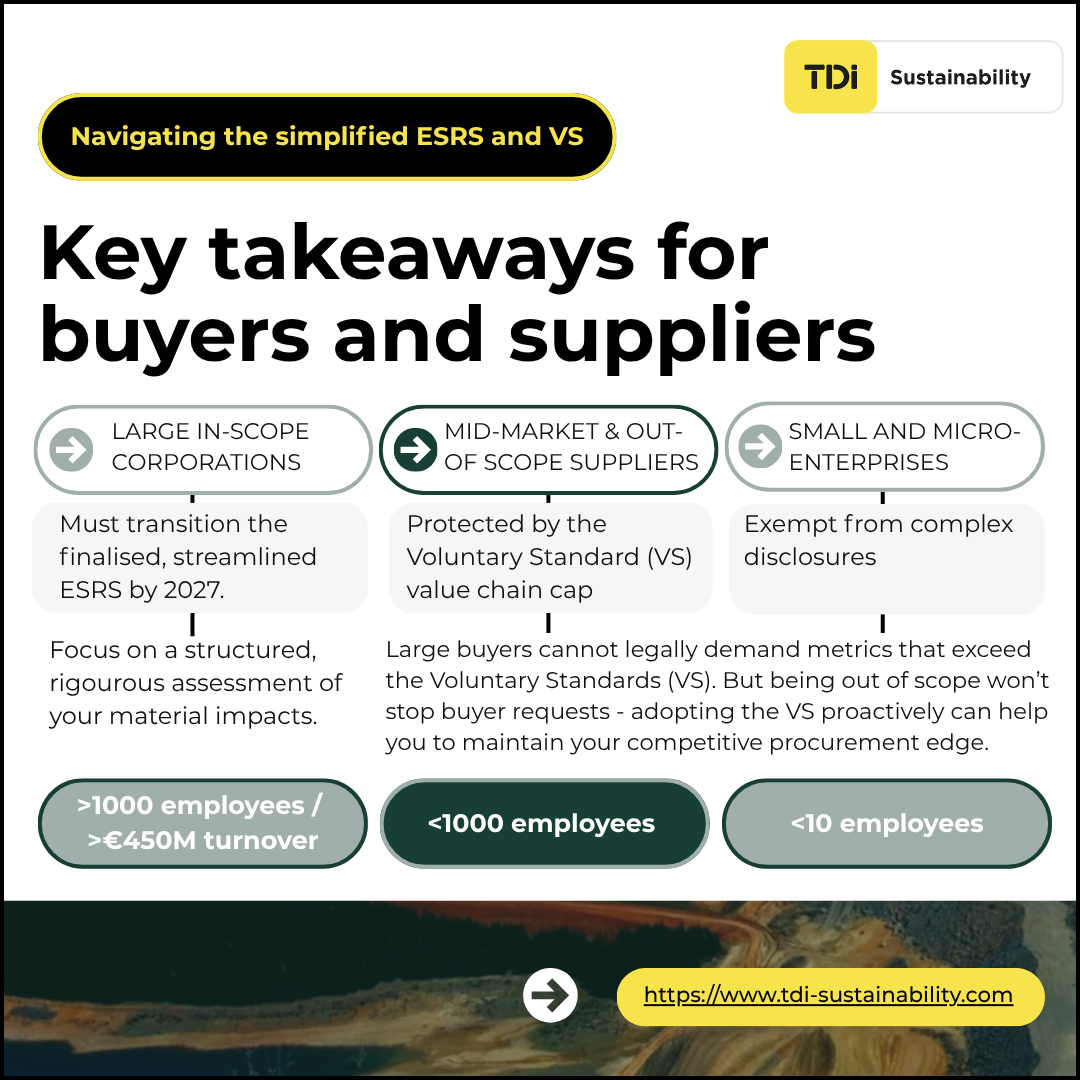
- The value chain cap introduced under the Voluntary Standard limits data requests that large CSRD-reporting companies can legally force upon smaller suppliers in their supply chain.
- The overarching legislative scope of the CSRD has been significantly narrowed via the separate Omnibus I Directive: This legal amendment fully exempts listed SMEs and raises the reporting thresholds to focus strictly on large undertakings with more than 1,000 employees and €450 million in net turnover.
- New operational reliefs within the revised ESRS framework have been introduced – giving reporting companies critical technical flexibilities on GHG reporting boundaries and digital tagging timelines, while incorporating the separate Omnibus allowance to safely omit commercially sensitive information.
What do the key changes mean in practice?
- For reporting companies – fewer datapoints doesn’t mean less scrutiny of material impacts. The question shifts from “how much can we collect?” to “which information from our value chain actually matters?”
- For suppliers and producers – requests from EU customers should become more focused. Those with credible, well-evidenced management systems will be better placed to answer them.
- For everyone – now is the time to revisit double materiality assessments and data requests against the final text.
Get in touch to find out how TDi Sustainability can support your business in navigating the CSRD, and in evaluating, reviewing, and aligning existing and ongoing CSRD projects against the final version of the ESRS.
See how TDi helps large and small companies navigate value chain relationships here.
Track regulatory changes affecting your business with the TDi Standards and Regulations Tool – part of the TDi Digital Platform and TDi’s regulation and standards mapping services.