Data, Standards and Finance: Reflections from Day 3 of WCEF2026
September 18, 2026

Digital Product Passports (DPPs): From compliance data to circular value Chains
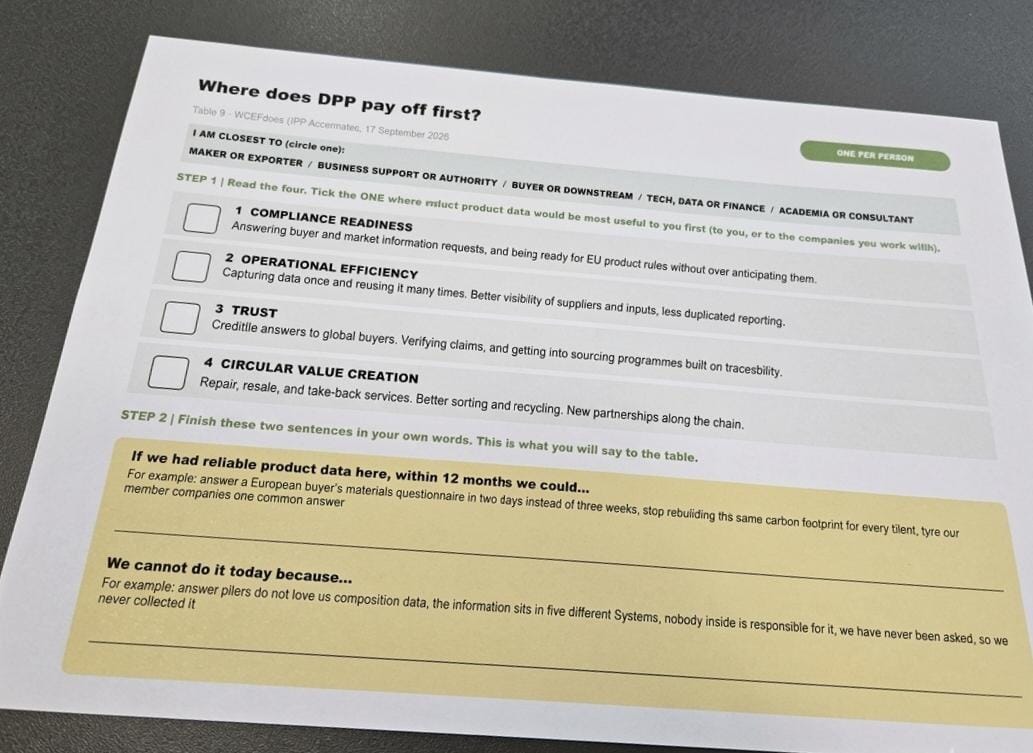
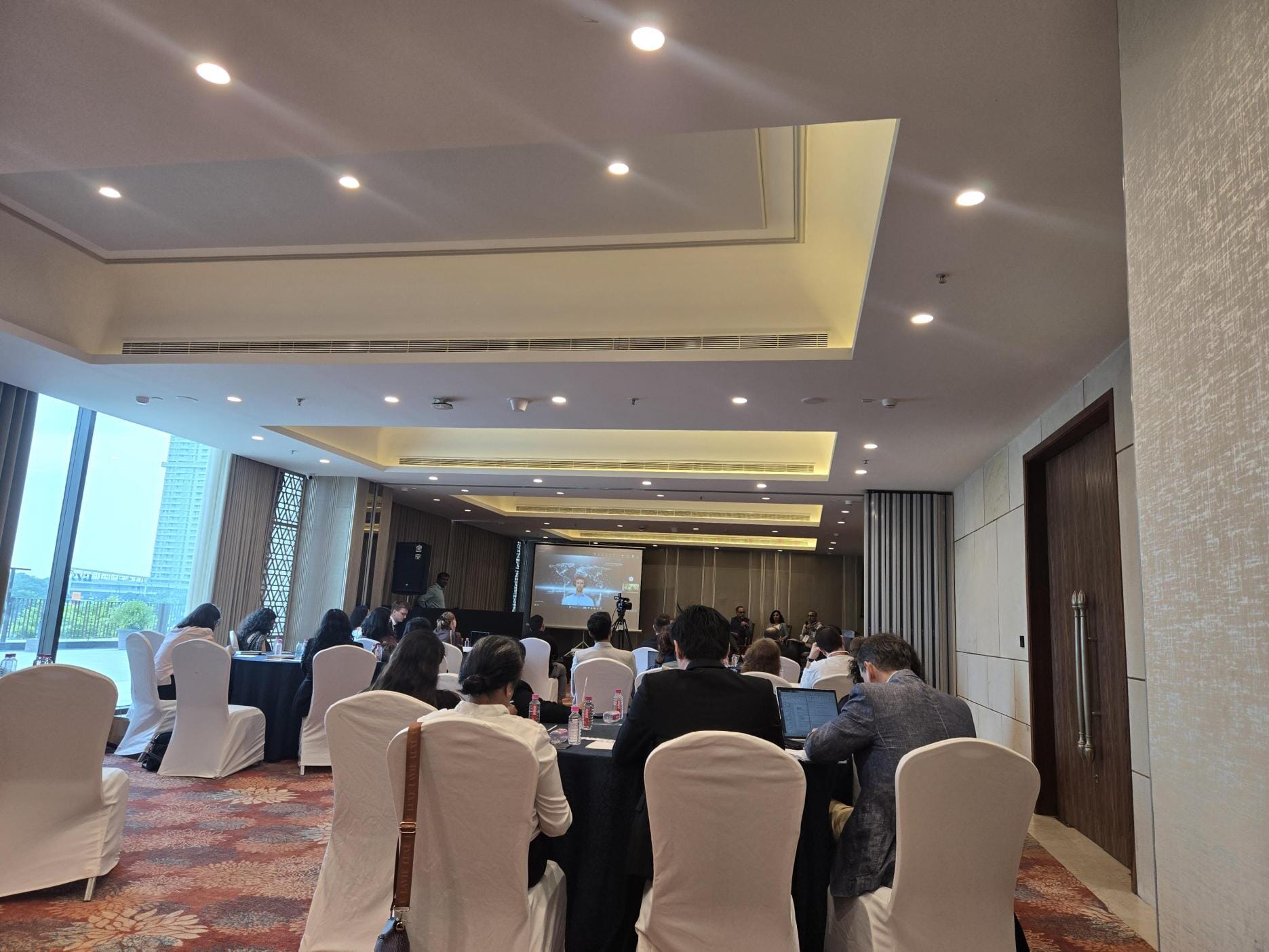
The Digital Product Passport (DPP) accelerator session was interactive, with participants working through where DPPs could create practical value and what would be required to implement them across complex value chains.
Compliance emerged as an immediate area where DPPs could add value: reliable product and supply-chain data could support meeting standards, simplify traceability audits and improve transparency. The same data could potentially support wider circular applications too, such as repair, reuse, refurbishment and material recovery.
Significant challenges remain, however. Complexity increases sharply for products containing multiple materials and components and involving suppliers across different geographies, and there are open questions around what data should be collected, how granular it needs to be, and how far upstream the requirements should extend. Data access, confidentiality, company secrets, verification and security all need to be considered alongside transparency – and there’s a clear need to avoid creating duplicate data requirements where information already exists through standards, certifications, audits or regulatory processes. A practical way forward discussed was piloting DPPs across different products and sectors, involving suppliers from different geographies, to test data requirements and governance approaches.
This connects strongly with TDi’s work on standards, assurance, traceability and responsible value chains, including through tools such as TDi’s Standards and Regulations Tool and the wider TDi Digital Platform. DPPs could potentially provide a digital layer connecting existing requirements and data, rather than becoming another parallel compliance exercise.
Key takeaway: The longer-term opportunity is to connect responsible sourcing → traceability → standards compliance → assurance → product transparency → circular value chains.
Financing circularity: creating the conditions for investment
The financing circularity session offered a positive perspective on the growing role of financial institutions in accelerating the circular economy. UNEP Finance Initiative guidance and examples from financiers highlighted a range of financial instruments and approaches being developed to support circular business models.
Financial institutions are increasingly considering circularity as part of investment and financing decisions, and a range of instruments and approaches can help direct capital towards circular business models. But circularity needs to be considered alongside wider environmental and social impacts – addressing one problem shouldn’t create another elsewhere in the value chain. Better data, metrics and definitions are needed to give investors confidence in what constitutes a genuinely circular activity, and standards were identified as a significant gap in scaling circular finance. This raised an important question: do we need dedicated circular economy standards, or should circularity be progressively integrated into existing sectoral and sustainability standards? There is also a need to consider what indicators should be used to measure circularity and how new circular materials and products should be assessed.
This discussion connects directly with TDi’s work on standards, assurance and responsible value chains, and with TDi’s ESG finance and investment solutions, including impact investing. As circularity becomes increasingly relevant to investment decisions, credible standards, metrics, data and assurance will be important in creating a common language between companies, financiers and other stakeholders.
Key takeaway: Finance creates the incentive → standards define expectations → data provides evidence → assurance builds trust → capital can support credible circular outcomes.
Get in touch to discuss how TDi can support your business with:
- Digital Product Passport readiness and data strategy
- Standards, traceability and assurance for circular value chains
- Integrated compliance and assurance tools and digital solutions
- ESG finance and investment frameworks for circular business models
- Metrics, data and standards to support circular finance decisions
This is Day 3 of TDi’s WCEF2026 series.
Read the insights from day 1 here and the insights from day 2 here.
Explore TDi’s work by sector and service: Value Chain Development, Standards & Traceability · TDi Digital Platform · Integrated Compliance Assurance Tool (ICAT) · Finance & Investment · Impact Investing