Two Sources, One Material Future: Reflections from Day 2 of WCEF2026
September 16, 2026

Moving from material dependency to material security
As demand continues to grow, the question becomes how primary and secondary materials can be used together to build resilient, sustainable supply chains.
Circular economy policies and strategic frameworks are increasingly recognising the link between circularity and material security. Reducing dependency on virgin resources through better recovery, recycling and reuse can strengthen supply resilience, while responsible primary production remains necessary to meet demand and to supply materials that cannot yet be recovered at sufficient scale or quality. The opportunity is not to choose between the two, but to build a system where virgin and recycled materials are complementary sources of supply.
The discussions highlighted how countries are developing policy and institutional approaches to strengthen critical mineral supply while also building capacity to recover materials from existing stocks. India’s Resource Efficiency and Circular Economy Industry Coalition (RECEIC) was cited as an industry-led example bringing companies together across sectors to accelerate resource efficiency and circular economy action, with a focus on partnerships, technology cooperation and finance for scale. South Africa’s Circular Minerals and Metals Initiative (SACMMI) was also highlighted, focused on embedding circular economy science, technology and innovation within the mining and minerals sector. These approaches reinforce an important point: resource security doesn’t mean choosing between mining more and recycling more – it can mean building a more resilient system that draws responsibly from both.
Technology and design matter
This requires investment across the value chain – from advanced recycling and precision sorting to more efficient transformation processes – but recovery also needs to be considered much earlier. Design for recovery, dismantling and material separation can determine whether materials retain their value at end of life.
Collaboration is essential
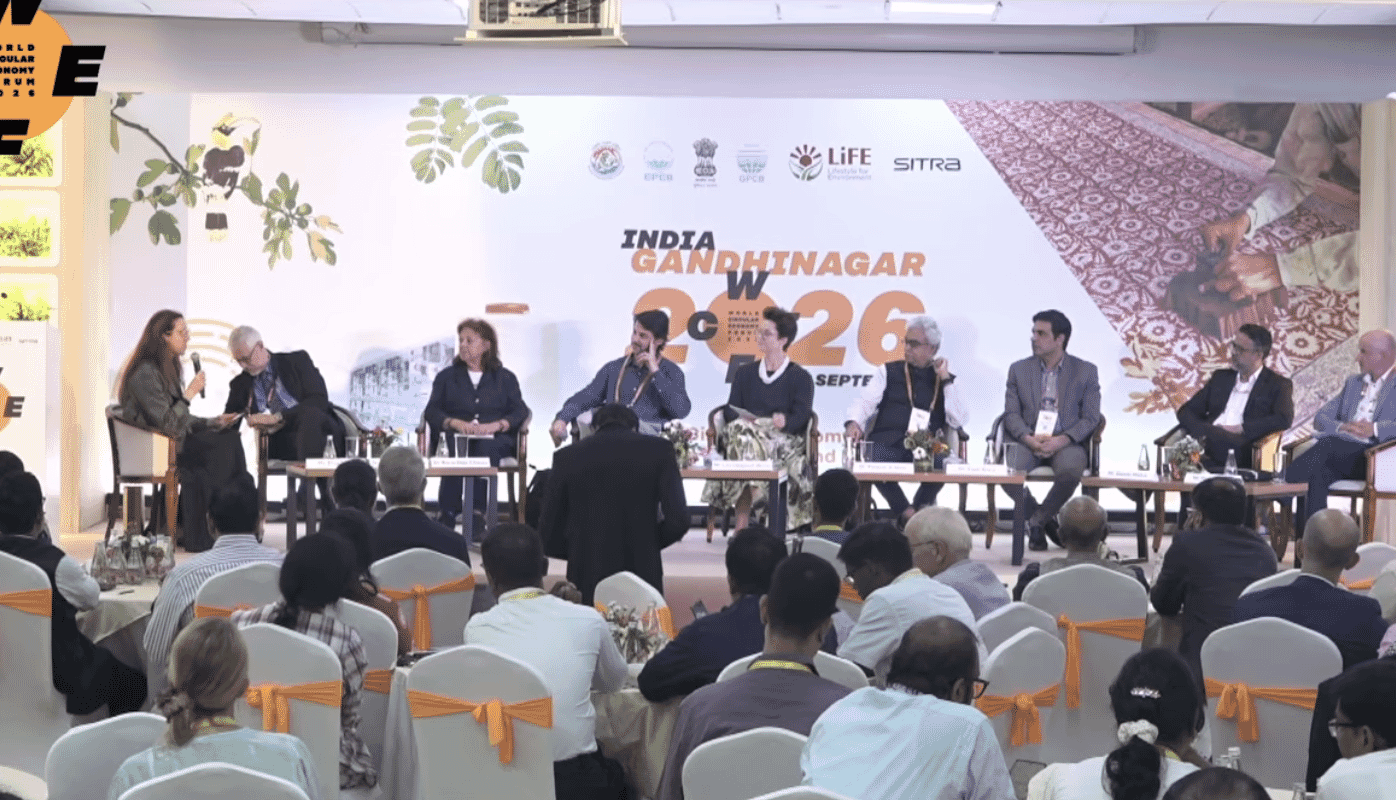
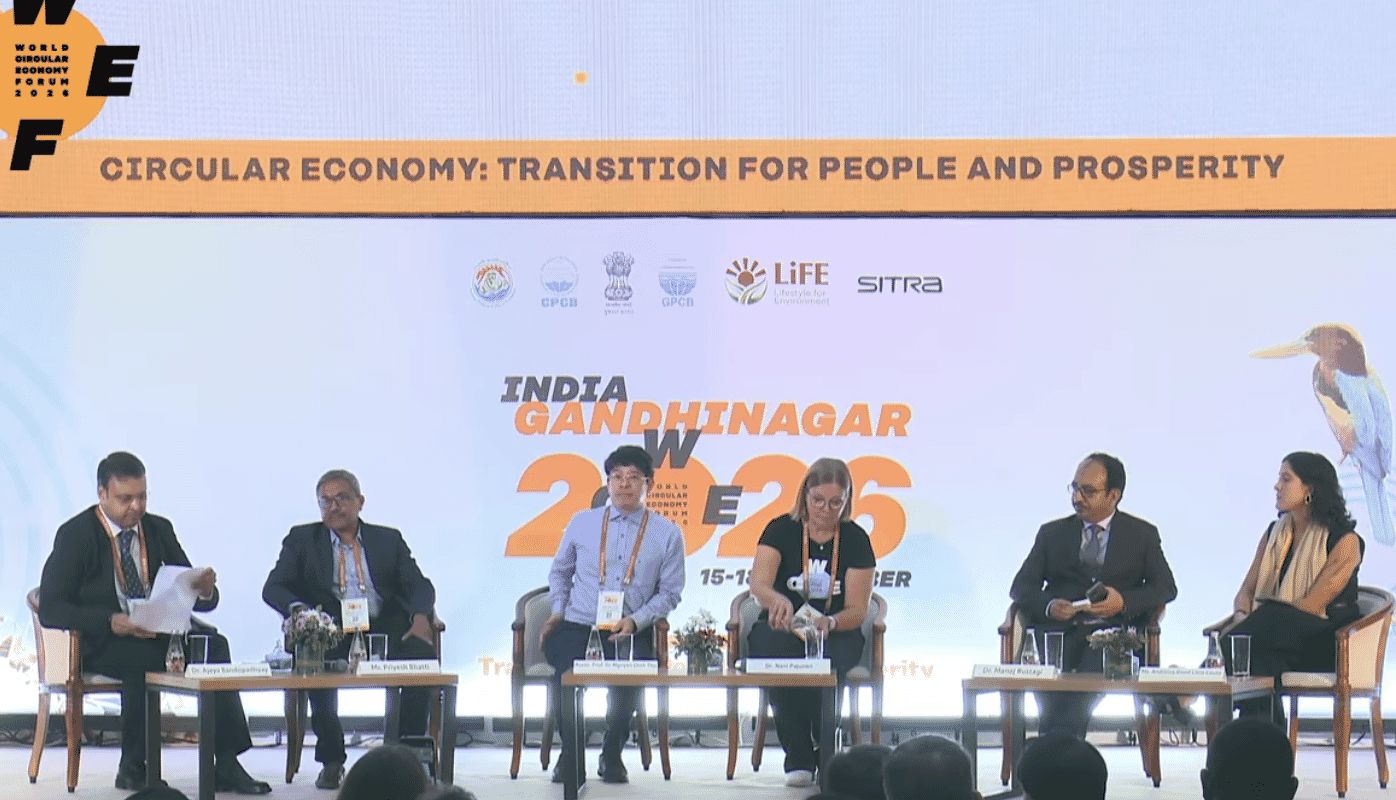
No single actor can create this system alone: manufacturers, recyclers, material producers, policymakers, technology providers and financial institutions all have different roles to play in making circular material flows technically feasible and economically viable, including creating markets where secondary materials are trusted and specifications are clear.
This conversation connects strongly with TDi’s broader work on critical minerals and sustainability strategies, and with material and country risk data available through the TDi Digital Platform. Some specific initiatives focused on material security, responsible sourcing and building more resilient systems include:
- Work on urban mining in Ghana mapping supply chains, interviewing waste collectors and recyclers on the ground, and developing an understanding of where and how downstream companies could become engaged in the process
- Supporting the development of the EO100 Energy Standard for Equitable Origin
- Production of ASM management plans (for example in Guinea and Tanzania) and critical minerals strategy work with multilateral development banks
- Long-running involvement with our sister organisation The Impact Facility for Responsible Mining Communities working to bring responsible artisanal and small-scale mining (ASM) Cobalt into the market via Responsible Mineral Credits.
Key takeaway: We don’t need to choose between virgin and recycled materials. We need to build resilient material systems that can responsibly use both sources, while increasing our ability to retain materials in circulation.
Industry collaboration: from individual action to circular ecosystems
Another main theme that was explored on Day 2 was industrial symbiosis and the role of industry-led initiatives in making circularity work beyond individual organisations. Industrial symbiosis has evolved from relatively local exchanges of waste and by-products into a broader approach to creating economic value from resources that would otherwise be lost – but scaling it requires more than individual business cases. It requires information sharing, common approaches, trust between organisations and an enabling policy environment.
A key message was the changing role of government – from simply regulating industry towards also facilitating industrial ecosystems through incentives, infrastructure, planning and appropriate regional approaches. At the same time, industry initiatives can give businesses a space to work collectively on challenges that are difficult to solve individually, particularly within existing industrial ecosystems, where circularity may require connecting different companies, material flows and infrastructure rather than simply changing one organisation’s operations.
This resonated with TDi’s experiences of working with industry-led initiatives that bring multiple stakeholders together around shared sustainability challenges. Through the Solar Stewardship Initiative (SSI), the solar industry comes together around common ESG expectations, creating a shared framework that can be applied across the value chain rather than relying solely on individual company approaches. Similarly, the Coloured Gemstones Working Group (CGWG) has demonstrated how industry collaboration can help address complex sustainability challenges through collective approaches, shared expectations and practical implementation.
These initiatives illustrate an important principle: industry collaboration can create the scale and consistency needed to move from individual sustainability projects towards systemic change. For the circular economy, this could mean bringing manufacturers, recyclers, material suppliers, policymakers, technology providers and other stakeholders together to identify material flows, develop common approaches and create viable circular business models.
Key takeaway: Circularity becomes more powerful when we stop looking at organisations in isolation and start looking at the ecosystems around them. Industry initiatives and multi-stakeholder platforms can help create the connections, common frameworks and collective action needed to make that shift.
Responsible sourcing: building on existing standards rather than creating more
A third theme that stood out was the importance of responsible sourcing, traceability and credible verification as circular and bio-based value chains expand. The discussion around forest-based materials and the Forest Stewardship Council (FSC) was particularly interesting: rather than creating another standalone standard or label for every emerging sustainability issue, there is value in integrating relevant parameters into existing, established standards and certification frameworks that industry already understands and uses. This can reduce duplication, avoid additional compliance burdens and make sustainability expectations easier to adopt across value chains.
This connects strongly with TDi’s work on standards, responsible sourcing, traceability and assurance. The opportunity is not necessarily to create another framework, but to ask:
- What responsible-sourcing parameters are already covered by existing standards?
- Where are the gaps as circularity, critical materials and new bio-based value chains evolve?
- How can new parameters be integrated into existing frameworks rather than creating another standard and label?
- How can assurance and traceability provide confidence that these requirements are actually being implemented?
This is particularly relevant for sectors where companies are already navigating multiple sustainability requirements and certifications.
Key takeaway: Scaling responsible and circular value chains may depend as much on better integration of requirements into existing standards as on developing new ones. Standards and assurance are practical infrastructure for the circular economy – providing common expectations, credible implementation and confidence across complex value chains.
Get in touch to discuss how TDi can support your business with:
- Critical minerals and material security strategies
- Material and country risk data and traceability
- Industry-led collaboration and pre-competitive initiatives
- Circular value-chain mapping
- Integrating circularity parameters into existing standards
- Standards and assurance for circular products and materials
This is Day 2 of TDi’s WCEF2026 series. Catch up with Rajalakshmi’s insights from Day 1 here and watch out for insights from Day 3 tomorrow.
Explore TDi’s work by sector: Energy · Jewellery · Governments & Public Organisations · Automotive · Electronics · Finance & Investment